


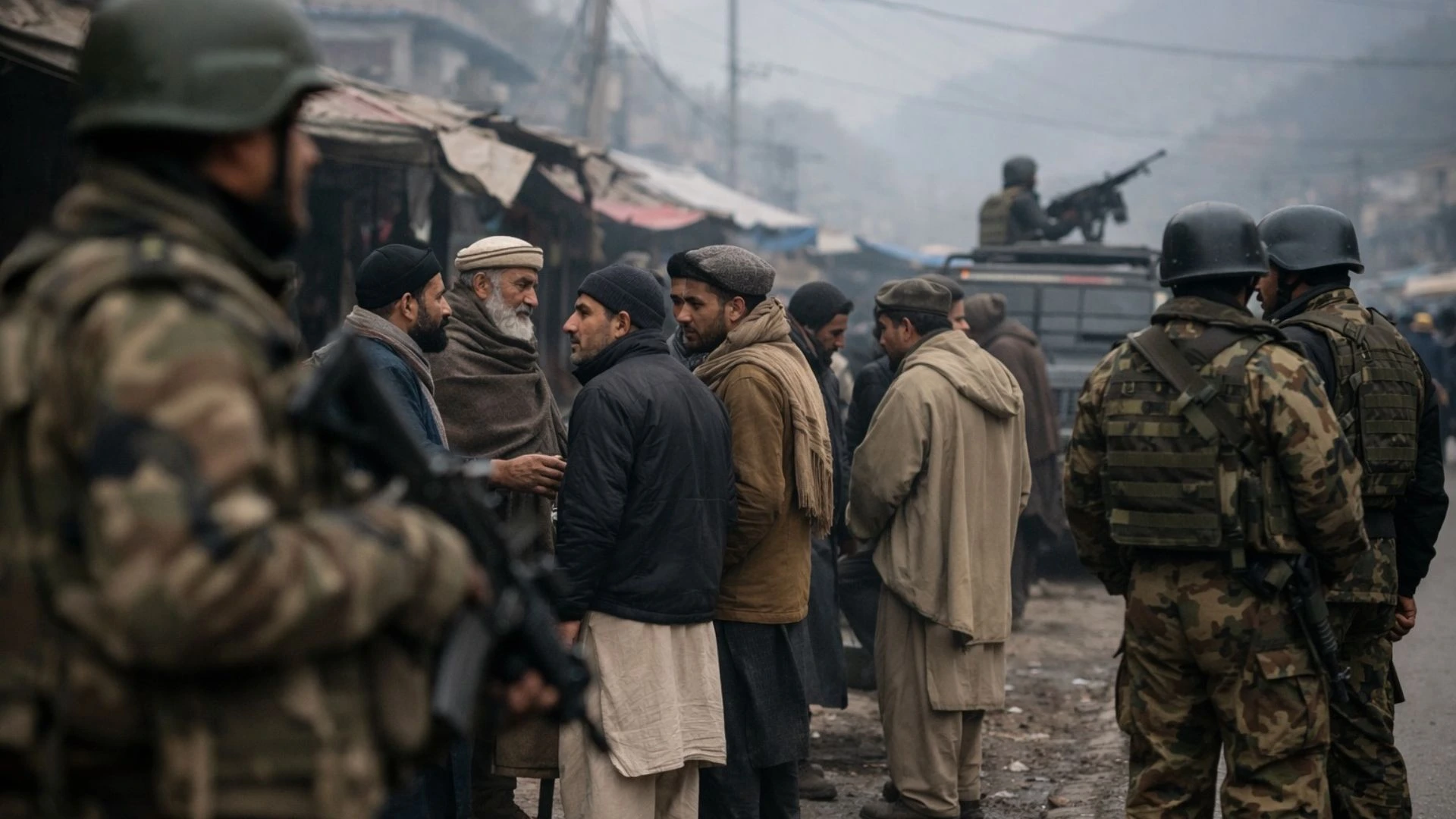
The debate over the military's influence in the political and security sectors in Pakistan has intensified once again. A recent analysis argues that the long-term impact of the military establishment on Pakistani politics not only weakens the domestic political process but also adds complexity to regional conflict management.
In Pakistan's political history, the military has long remained a powerful institution. Disputes regarding the balance of power among the elected government, political parties, and security institutions have repeatedly impacted Pakistan's political stability.
Questions have also been raised about how effective the role of the civilian government remains in key national security and foreign policy decisions when military influence is strong. Particularly in relations with India, Afghanistan, and other neighbors, the influence of a security-centric perspective is considered significant in Pakistan's foreign policy.
Pakistan has long faced security challenges, border disputes, terrorism, and regional tensions. Debates are also ongoing regarding the risk that prioritizing a military perspective on such issues could weaken political and diplomatic options.

Interested in this ad?
Would you like to continue to the link or provide your information for more details?
Please provide your information
To continue, please fill in your details
When political instability rises within Pakistan, its impact can also extend to the economy. Because political uncertainty can affect investor confidence, foreign investment, government spending, and development priorities, the stability of civilian institutions is also crucial from an economic perspective.
The analysis claims that Pakistan's security-centric governance structure, rather than resolving regional conflicts, may in some cases make them more complex. However, this conclusion is an analytical opinion and should be understood as political analysis rather than an established fact.
The upcoming challenge for Pakistan is to maintain a balance between national security needs and the role of democratic institutions. If political parties, parliament, and civilian institutions become strong, it can be expected that building a broad political consensus on security and foreign policies will become easier.
Due to Pakistan's strategic importance in South Asia, its internal power balance also influences relations with neighboring countries. Therefore, the relationship among civilian governance, military influence, and regional security policy in Pakistan appears set to remain an important topic in South Asian politics in the coming days.