



KATHMANDU, NEPAL — A quiet diplomatic crisis that unfolded in late 2024 has cast a renewed spotlight on the high-stakes intersection of religion, infrastructure, and international politics in the Himalayas. At the center of the controversy is Gyaincain Norbu, the 11th Panchen Lama recognized by the Chinese government, and Nepal’s delicate balancing act to maintain its religious neutrality.
The December 2024 Diplomatic Controversy
The standoff peaked in mid-December 2024, when Kathmandu and Lumbini—the birthplace of the Buddha—co-hosted the 9th Nanhai (South China Sea) Buddhism Shenzhen Roundtable.
● The Secret Plan: Ahead of the event, intelligence leaked that Beijing was quietly orchestrating a high-profile visit for Gyaincain Norbu. He was scheduled to arrive in Lumbini on a chartered flight, accompanied by over 220 Chinese monks, to officiate a special puja (prayer ceremony).
● The Backlash: The news immediately triggered fierce protests from Tibetan exile groups. They urged Nepal to block the visit, framing it as an implicit endorsement of Beijing’s interference in traditional Tibetan religious affairs.
● Nepal’s Rejection: Caught in a geopolitical bind, the Nepali government intervened. Citing its strict policy of "neutrality on religious matters" and recognizing the immense diplomatic sensitivities, Nepal's Ministry of Foreign Affairs sent a formal diplomatic note to the Chinese Embassy, explicitly barring the Panchen Lama's arrival.
● The Outcome: While the roundtable conference proceeded and the massive delegation of Chinese monks arrived on their chartered flight, the Vice-chairman of the Lumbini Development Trust later confirmed that Gyaincain Norbu was not in attendance.
To understand why this aborted visit was so sensitive, one must look at the deeply contested history of the Panchen Lama lineage and China’s strategic investments in Nepal.
The Historical Dispute: A Tale of Two Panchen Lamas
The Panchen Lama is the second-highest spiritual figure in the Gelug school of Tibetan Buddhism, traditionally playing a vital role in identifying the reincarnation of the Dalai Lama.
The current controversy traces back to the 1989 death of the 10th Panchen Lama. For years, search parties sought his reincarnation.
● The Dalai Lama's Choice: In May 1995, the 14th Dalai Lama recognized a six-year-old boy named Gedhun Choekyi Nyima as the 11th Panchen Lama. Almost immediately following this announcement, the boy and his family disappeared from public view.
● Beijing's Choice: Rejecting the Dalai Lama's candidate, the Chinese government hosted its own ceremony later that year. Using the "Golden Urn" method—a lottery system dating back to the Qing Dynasty—Beijing selected Gyaincain Norbu (Bainqen Erdini Qoigyijabu) and officially installed him as the 11th Panchen Lama.

Interested in this ad?
Would you like to continue to the link or provide your information for more details?
Please provide your information
To continue, please fill in your details
Because the Panchen Lama will eventually be instrumental in recognizing the 15th Dalai Lama, cementing Gyaincain Norbu's legitimacy is central to Beijing's long-term strategy for managing Tibetan Buddhism.
Lumbini: Ground Zero for Infrastructure and Soft Power
To legitimize Gyaincain Norbu on the world stage, Beijing requires an international platform. Nepal, specifically the sacred site of Lumbini, serves as the perfect theater.
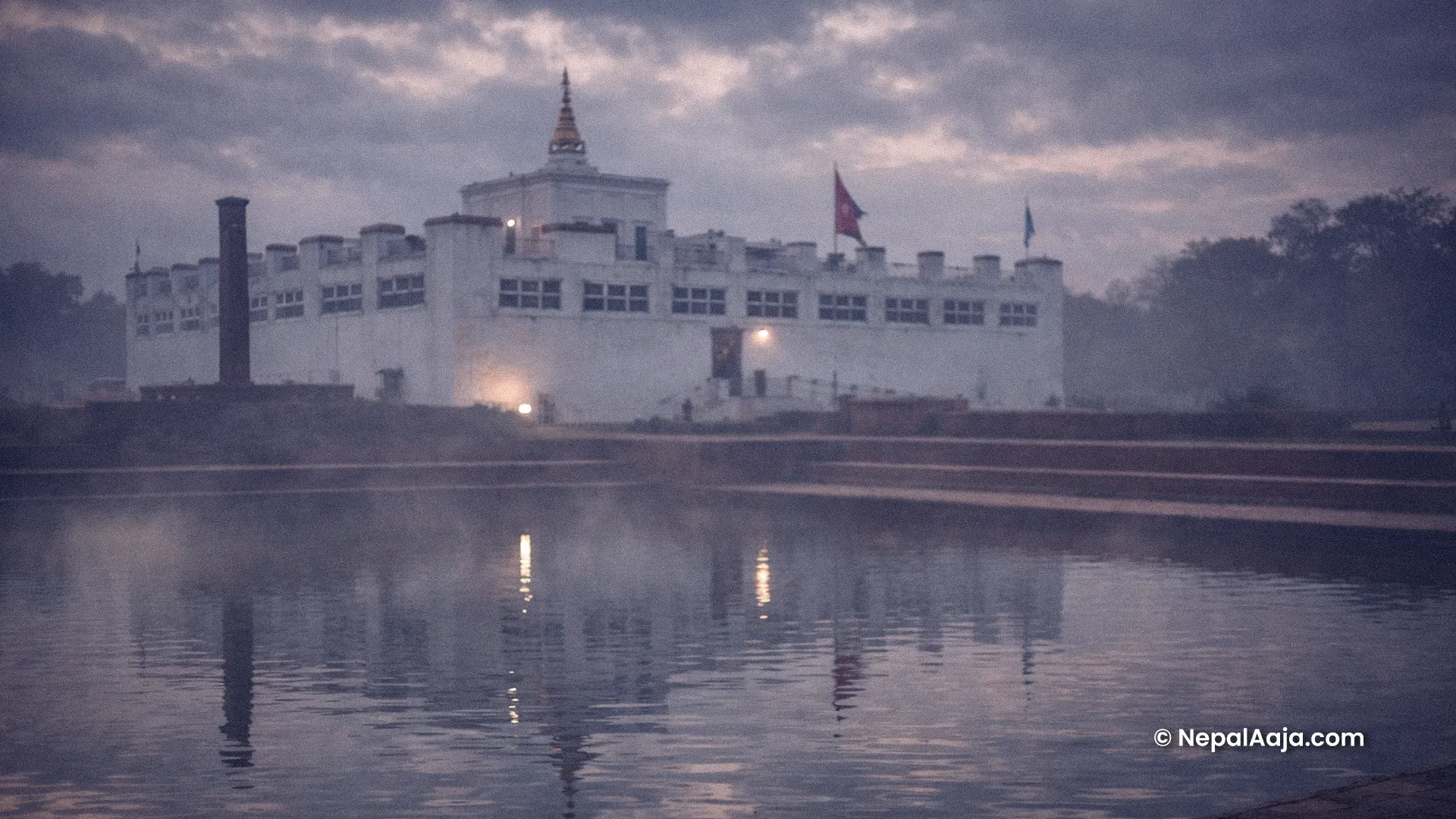
Over the last decade, China has aggressively utilized infrastructure investments to advance its soft power and religious diplomacy in Nepal:
● The Gautam Buddha International Airport: Built largely by Chinese contractors and heavily backed by Chinese loans, this airport in Lumbini was designed to handle international Buddhist pilgrims directly, bypassing Kathmandu.
● Monastic Footprints: China has funded the construction of massive, state-of-the-art facilities in Lumbini, such as the Zhong Hua Chinese Buddhist Monastery.
● Conference Diplomacy: By regularly sponsoring events like the Nanhai Buddhism Roundtable in Lumbini, China positions itself as a patron of global Buddhism.
Beijing views Lumbini as a highly visible stage. By promoting their appointed Panchen Lama in a sovereign, globally recognized Buddhist heritage site, China attempts to normalize his status, challenge the narrative of the Tibetan government-in-exile, and prepare him for the eventual succession of the Dalai Lama.
Nepal's Delicate Geopolitical Tightrope
The December 2024 incident underscores the intense pressure Kathmandu faces. Nepal shares a long, porous border with the Tibet Autonomous Region and relies heavily on Chinese economic investment and infrastructure development.
However, Nepal must also balance its relationships with India, Western nations, and its own large population of Tibetan refugees who remain fiercely loyal to the Dalai Lama. To survive this diplomatic tightrope, successive Nepali governments have maintained a strict, unwritten policy: keep prominent, politically sensitive Tibetan figures out of the country entirely. Historically, this has meant quietly barring official visits from both the 14th Dalai Lama and the China-appointed Panchen Lama, ensuring Nepal does not become a battleground for a proxy war over Tibetan Buddhism.