

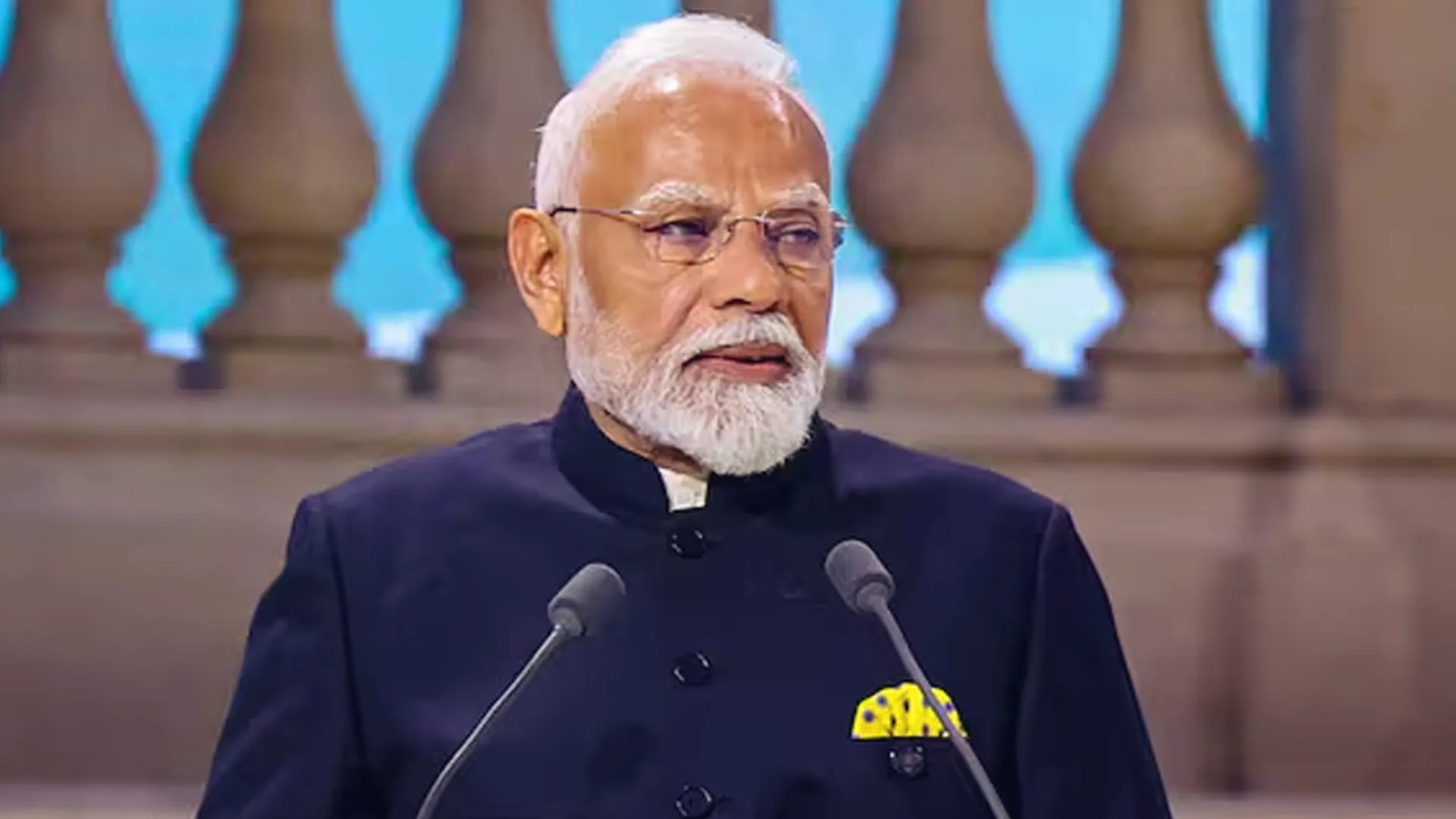
Prime Minister Narendra Modi has arrived in Israel for a two-day visit aimed at reinforcing strategic, trade and defence cooperation, at a time when geopolitical equations in the Middle East are undergoing visible shifts.
Before departure, Modi described India and Israel as partners in a “strong and multi-dimensional strategic relationship,” outlining meetings with Prime Minister Benjamin Netanyahu and an address to the Israeli parliament, the Knesset. He noted that bilateral ties have grown substantially in recent years.
Formal diplomatic relations between the two countries were established in 1992, and cooperation has expanded steadily since then. Observers often point to 2014, when Modi assumed office, as a turning point in deepening engagement. His 2017 visit to Israel and Netanyahu’s subsequent trip to India further strengthened political visibility, with both leaders publicly referring to each other as friends.
New Delhi has expanded collaboration with Israel in defence, agriculture, technology and cybersecurity. Talks on a proposed India-Israel free trade agreement resumed in New Delhi this week. According to the Indian government, bilateral trade reached 3.62 billion US dollars in 2024–2025.

Interested in this ad?
Would you like to continue to the link or provide your information for more details?
Please provide your information
To continue, please fill in your details
During the visit, Modi is also scheduled to meet President Isaac Herzog. The trip comes against the backdrop of the India-Middle East-Europe Economic Corridor announced in September 2023, which envisioned railway, port, energy and data connectivity projects. However, the October 7 attack by Hamas on Israel and the subsequent Gaza conflict disrupted those plans.
The visit has drawn political reactions within India. Congress leader Priyanka Gandhi has said Modi should also refer to the deaths of thousands of civilians in Gaza during his Knesset address. India, home to around 220 million Muslims, has simultaneously maintained ties with Gulf nations and Iran while expanding cooperation with Israel.
India’s balancing act is evident in multiple engagements: the Adani Group operates the Haifa port, Israeli drone technology played a role in the May 2025 confrontation with Pakistan, and India remains involved in developing Iran’s Chabahar port to enhance trade access to Afghanistan.
Modi’s visit therefore underscores not only defence and trade priorities, but also India’s effort to position itself as an active and calibrated actor in a complex regional landscape.