


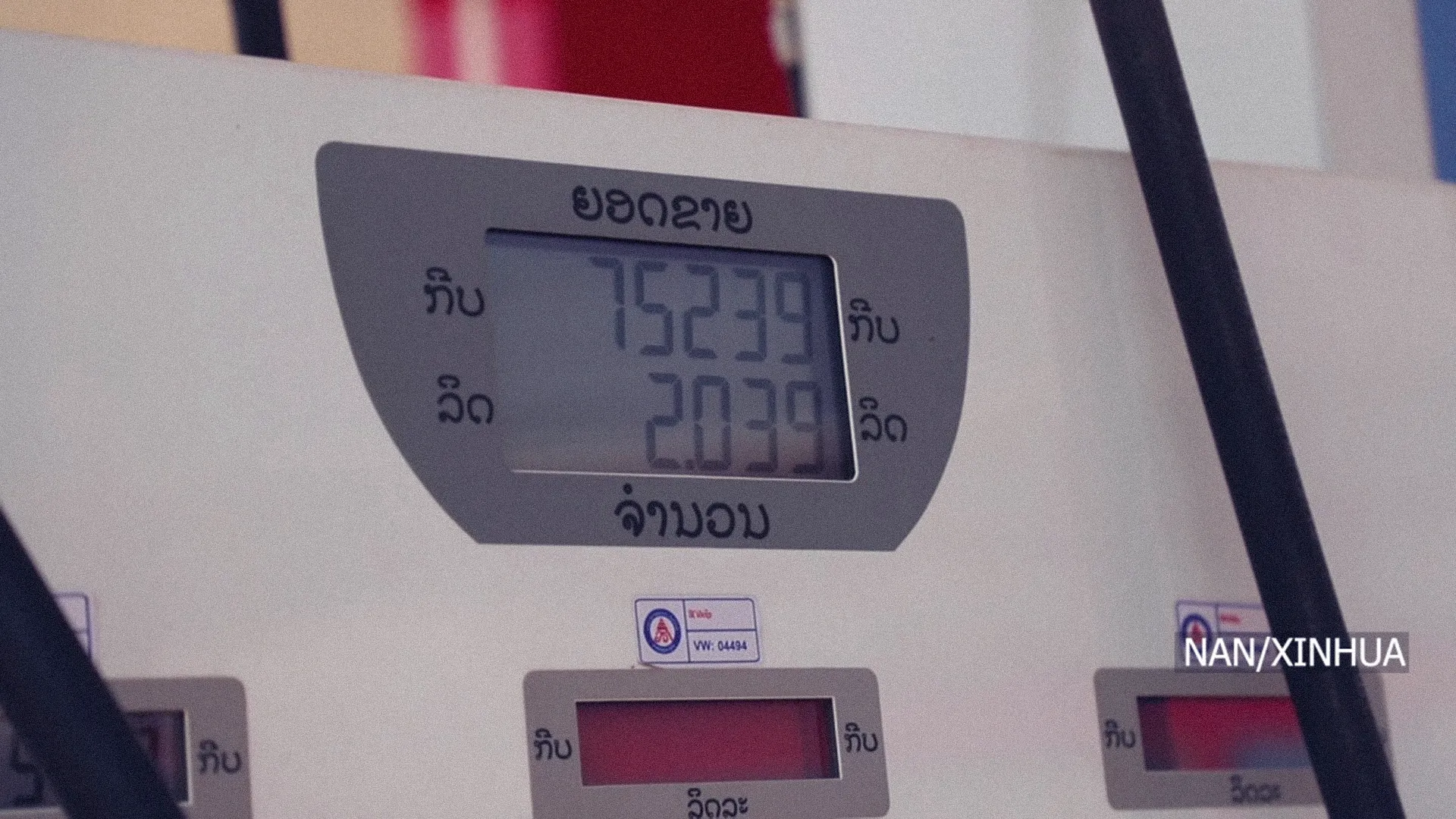
Laos has moved to ease pressure on households and businesses by introducing urgent measures to manage a growing fuel crisis driven by rising global energy prices and supply disruptions.
According to an official notice from the Lao Ministry of Industry and Commerce, the government has reduced fuel excise taxes to curb sharp domestic price increases. Petrol tax has been lowered from 25 percent to 15 percent, while diesel tax has been cut from 10 percent to zero percent.
Authorities have also committed to using subsidy funds to stabilize fuel prices and reduce the burden on consumers amid volatile global markets. Importers and distributors have reaffirmed their role in maintaining steady supply, while the government plans to expand storage and distribution networks, particularly in remote areas.
In response to the crisis, the Prime Minister’s Office issued directives on March 13, instructing ministries to reduce fuel consumption and strengthen economic stability. Measures include staggered work schedules, increased remote meetings, limiting unnecessary travel, and implementing cost-cutting strategies.

Interested in this ad?
Would you like to continue to the link or provide your information for more details?
Please provide your information
To continue, please fill in your details
Officials are also monitoring fuel importers and distribution centers, promoting energy conservation, and expanding infrastructure for electric vehicles. Public transport use is being encouraged, and price monitoring of key agricultural goods is underway to control broader inflation risks.
To address immediate shortages, mobile fuel services have been launched in the capital Vientiane, while free bus services have been introduced in Champasak province. Authorities say these measures will remain in place until the fuel situation stabilizes.
Speaking in a press interview, Minister and Head of the Prime Minister’s Office Bouvakhong Nammavong noted that ongoing Middle East conflicts have impacted global energy markets, contributing to Laos’ domestic fuel challenges. He added that a special committee has been formed and work-shift adjustments and remote work policies have been implemented to mitigate the crisis.