


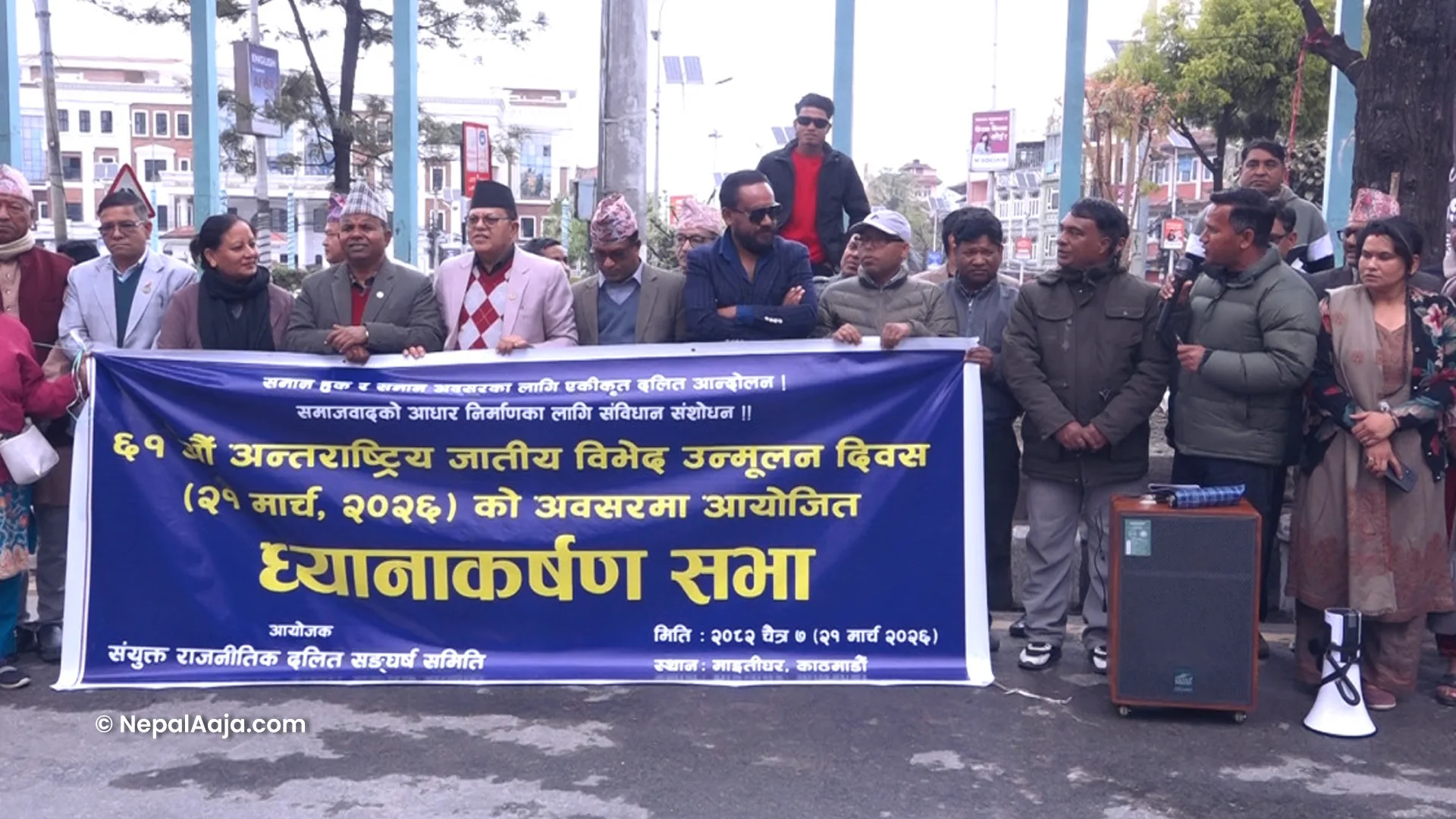
The glaring disparity between Nepal’s constitutional guarantees and the lived reality of its marginalized communities took center stage in Kathmandu on Saturday, as hundreds gathered to demand definitive structural reforms. Marking the 61st International Day for the Elimination of Racial Discrimination, protesters highlighted that while the law criminalizes caste-based prejudice, deeply rooted social oppression and untouchability remain highly prevalent across the country.
Organized by the United Political Dalit Struggle Committee, the massive awareness rally at Maitighar brought together prominent Dalit rights advocates, civil society members, and political figures. The demonstration operated under a powerful central mandate: calling for a unified movement to secure equal opportunities and demanding constitutional amendments to lay the groundwork for a truly socialist society. Participants emphasized that the annual observance is not merely ceremonial, but a crucial catalyst for their ongoing battle for equity.

Interested in this ad?
Would you like to continue to the link or provide your information for more details?
Please provide your information
To continue, please fill in your details
The historical gravity of the movement traces back to March 21, 1960, in Sharpeville, South Africa, where police opened fire on a peaceful anti-apartheid protest, killing 69 people. In memory of this tragedy, the United Nations officially designated the date as an international day of observance in 1966.
For Nepal's marginalized groups, this global day of remembrance has evolved into a vital platform for localized resistance. The continuous push for constitutional refinement signals a growing impatience with superficial legal protections, pointing toward an impending intensification of grassroots campaigns until absolute social justice and equality are realized in practice.