


Kathmandu — As Yemen's Houthi rebels escalate continuous missile and drone attacks on Saudi Arabia, the Mecca Joint Defense Agreement signed in August 2026 has faced its first serious security test. The pact between Saudi Arabia, Turkey, and Pakistan commits all three nations to treat an armed attack on any one member as an attack on all.
However, as Houthi strikes continue, questions have arisen regarding the pact's practical implementation. While Pakistan has reiterated its commitment to Saudi security, it has not decided on immediate direct military action. Meanwhile, Turkey stated it could offer technical support to meet Saudi Arabia's military requirements.
This situation highlights the gap between the new security framework's true capability, political will, and the strategic priorities of the three nations.
Houthi Attacks and Mounting Pressure on Regional Security
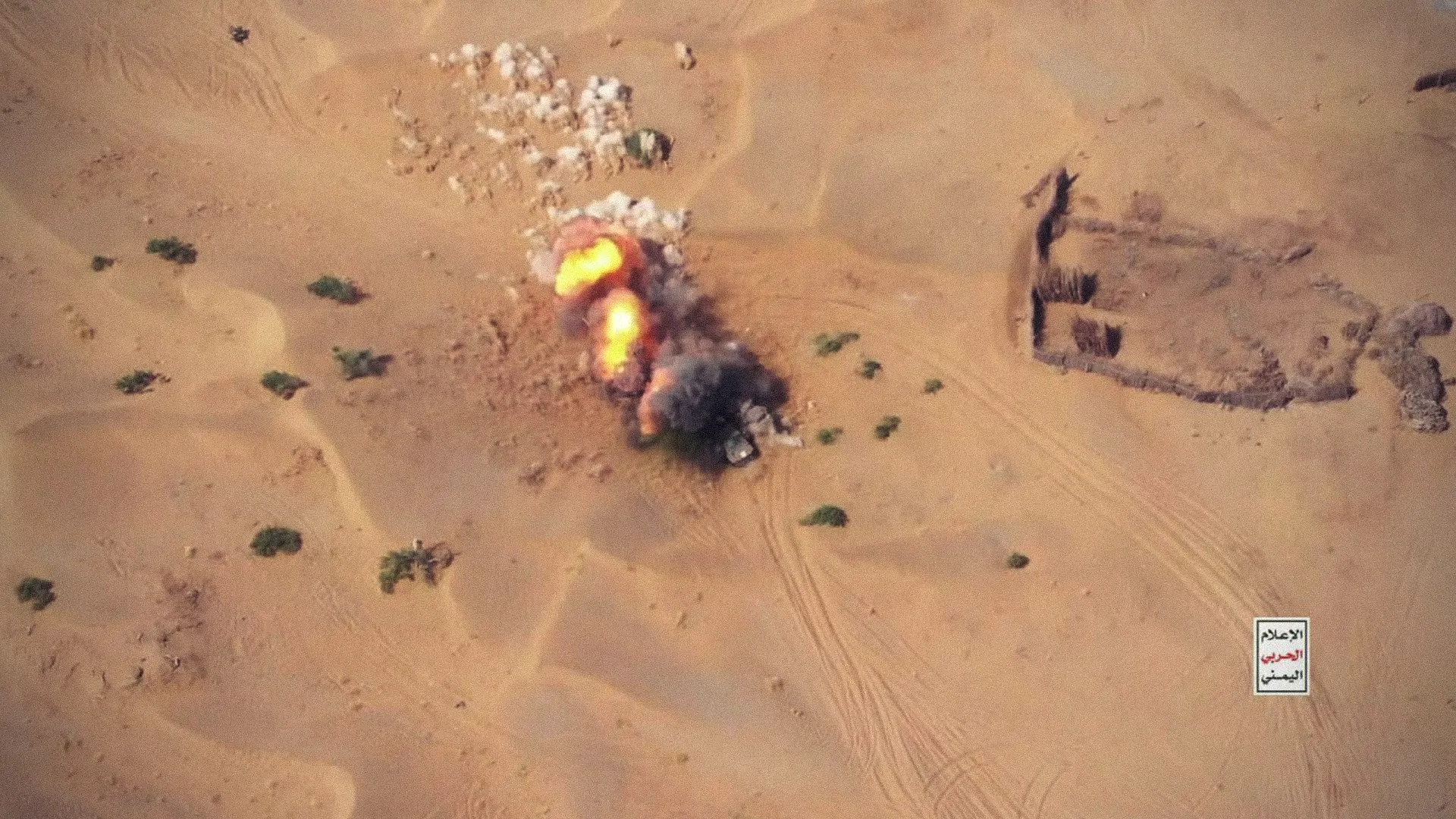
In recent months, Yemeni Houthi rebels have intensified missile and drone strikes against various regions in Saudi Arabia. Their capability to target energy infrastructure, airports, cities, and maritime trade routes has transformed this crisis from a local Yemeni conflict into a broader regional security threat.
The Red Sea and the Bab al-Mandab Strait are critical maritime routes for global trade and energy supply. Instability here could directly impact oil supplies, maritime shipping, and global trade costs.
Therefore, Houthi pressure on Saudi Arabia is not merely a Gulf security issue, but one directly tied to the global economy.
The First Real Test of the Mecca Defense Agreement
On August 7, 2026, Saudi Arabia, Pakistan, and Turkey signed the Mecca Joint Defense Agreement. The core concept of the pact is collective deterrence and mutual security cooperation.
The agreement establishes the principle that an armed attack against any member state will be viewed as an attack against all. It aims to provide Saudi Arabia with additional security partners during regional crises while giving Pakistan and Turkey new roles in the Gulf's security architecture.
However, declaring an agreement on paper and executing it during actual warfare are two different matters.
Houthi attacks are testing precisely this gap.
Pakistan's Strategic Dilemma
This situation is particularly complex for Pakistan. On one hand, it shares long-standing security and economic ties with Saudi Arabia. On the other hand, Pakistan itself is grappling with economic pressures, internal security challenges, and regional tensions.
Pakistani officials have signaled that a direct assault on Saudi Arabia could activate the agreement. Yet, so far, Pakistan has prioritized diplomacy over direct military intervention.
This reveals the rift between the agreement's political commitment and the capability to execute it militarily.
For Saudi Arabia, prompt and clear support from security partners is crucial. Thus, the real credibility of the Mecca Pact will depend on how effectively member states coordinate during crises in the coming days.
Turkey's Role is Also Crucial
Turkey has stated that it can provide technical support to fulfill Saudi Arabia's military needs. Given Turkey's advanced defense industry and growing capabilities in drone and military technology, its role within the pact could be significant.
However, direct military involvement and technical assistance are distinct. Thus, the degree of support Turkey will extend to Saudi security remains an open question.

Interested in this ad?
Would you like to continue to the link or provide your information for more details?
Please provide your information
To continue, please fill in your details
Changing Gulf Security Environment for India
The security restructuring in the Gulf holds significant implications for India as well. India's energy security, maritime trade, diaspora, and economic ties with West Asia are directly linked to stability in the Gulf.
In recent years, India has expanded economic, technological, infrastructure, and security ties with Saudi Arabia, the UAE, Israel, and other Gulf nations. Consequently, maritime security from the Red Sea to the Gulf aligns directly with India's broader strategic interests.
Securing maritime routes through Bab al-Mandab and the Red Sea is vital for India's trade and energy supplies.
From this perspective, as new security structures emerge in West Asia, India's multilateral and bilateral partnerships gain increased importance.
An Opportunity or a New Risk for Pakistan?
The Mecca Defense Pact offers Pakistan an opportunity to expand its footprint in Gulf security. Security ties with Saudi Arabia could yield economic and diplomatic benefits for Islamabad.
However, this comes with risks.
If the Saudi-Houthi conflict intensifies further, Pakistan may face a difficult choice between its stated security commitments and direct military engagement. Entering the Yemen conflict directly could embroil Pakistan in complications involving its relations with Iran, internal security, and economic stability.
Hence, while the Mecca Pact is a diplomatic achievement for Pakistan, military execution poses a formidable strategic challenge.
Key Question for India
For India, these developments underscore the importance of reliable security partnerships, maritime security, and independent strategic decision-making in West Asia.
Instead of relying on a single security bloc, India has expanded parallel ties with multiple power centers. Economic and strategic ties with Saudi Arabia and other Gulf states, partnerships in the Indo-Pacific, and maritime security cooperation form core pillars of India's broader foreign policy structure.
The Mecca Pact's first test unfolds amid this broader regional shift.
Impact Reaching South Asia
Conflict in West Asia is not a distant issue for South Asia. Millions of citizens from countries like India, Pakistan, Bangladesh, and Nepal work in the Gulf. Gulf stability directly affects South Asian economies through energy imports, remittances, and maritime trade.
Therefore, the security crisis created by Houthi attacks cannot be viewed merely as a localized struggle between Saudi Arabia and Yemen.
The true test of the Mecca Joint Defense Agreement will lie not in paper commitments, but in whether collective security capability can be demonstrated in times of crisis.
Ongoing attacks on Saudi Arabia are testing the security commitments of Pakistan and Turkey. Simultaneously, the shifting power balance in West Asia highlights the growing importance of India's independent, multi-partner strategic role.