


China-linked actors allegedly used Anthropic’s Claude artificial intelligence assistant to monitor dissidents, religious groups and overseas Chinese communities, according to a September 10 threat-intelligence report by US technology company Anthropic.
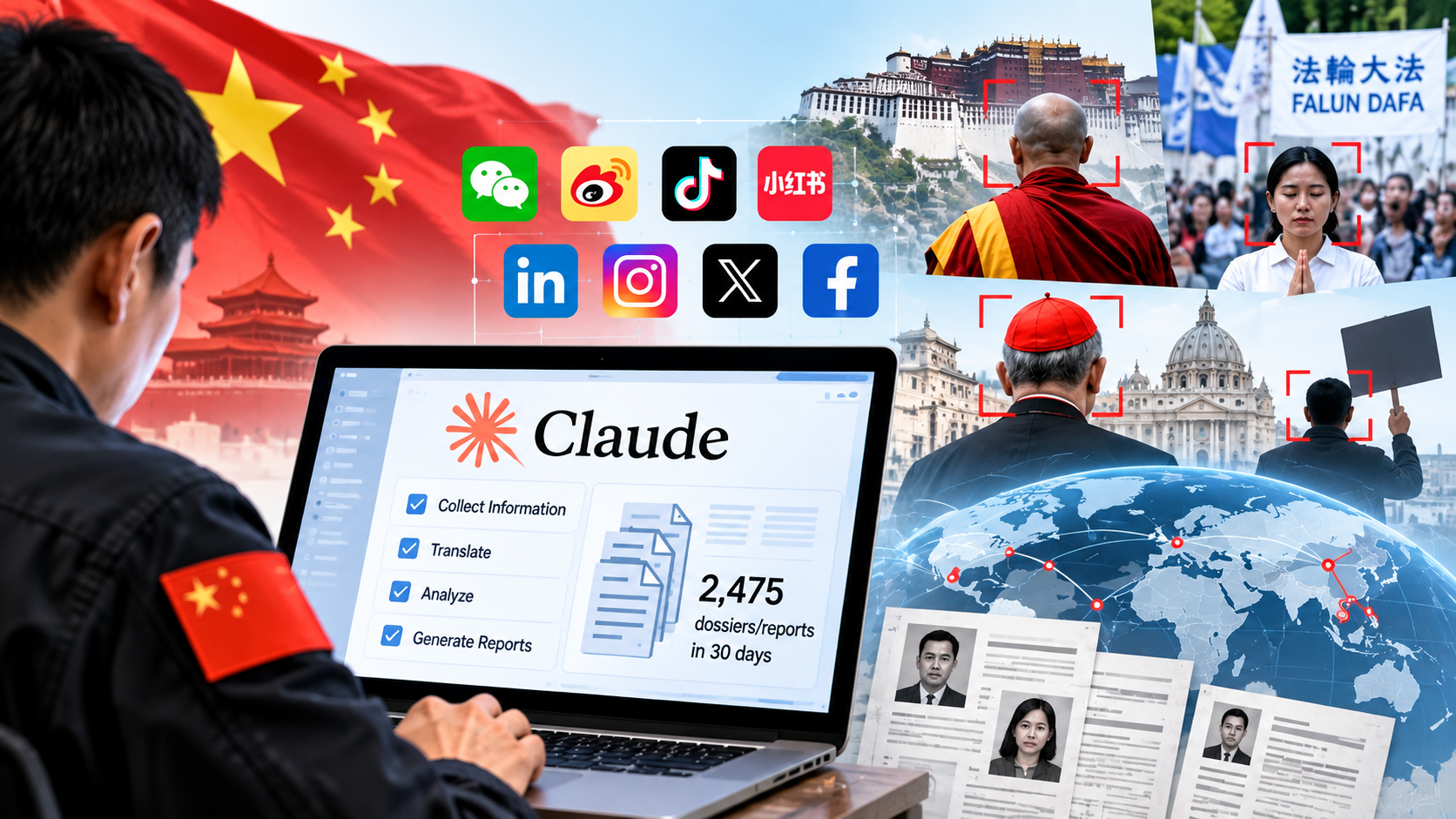
Anthropic said it identified a China-based intelligence operation in which Claude was used to collect, translate and analyse information on religious leaders, organisations and Chinese diaspora communities. The reported targets included Falun Gong practitioners, Tibetan organisations, senior Catholic figures in Asia, the Presbyterian Church in Taiwan and NTD, a media organisation affiliated with The Epoch Times.
According to Anthropic, one operator used Claude to perform work that would traditionally have required a much larger team of human analysts, generating thousands of intelligence products within a month. In one operation, the system reportedly produced 2,475 finished dossiers and reports in just 30 days.
The operator reportedly directed Claude to collect and translate information from multiple languages and turn it into Chinese-language intelligence dossiers, reports and daily situational briefings. Information was gathered from Chinese platforms including WeChat, Xiaohongshu, Douyin and Weibo, as well as international platforms such as LinkedIn, Instagram, Threads, X and Facebook.
The information reportedly included personal details such as dates and places of birth, immigration dates and social-media accounts. The operation also involved reconnaissance of religious venues, including the collection of floor plans, photographs of building facades and structural diagrams.
Falun Gong was among the groups identified as a target. Anthropic said operators compiled information on practitioners and associated organisations in the diaspora, including Shen Yun Performing Arts and NTD. The operators also reportedly instructed Claude to use terminology reflecting the Chinese government’s perspective and to analyse information from what Anthropic described as “China’s standpoint”.
The reported intelligence-gathering extended to other religious communities. Anthropic said senior Catholic cardinals across Asia were individually profiled, while leaders of the Presbyterian Church in Taiwan became subjects of multiple dossiers and venue reconnaissance. Tibetan Buddhist organisations and the Central Tibetan Administration were also reportedly targeted.

Interested in this ad?
Would you like to continue to the link or provide your information for more details?
Please provide your information
To continue, please fill in your details
Anthropic separately identified three accounts linked to Chinese municipal public-security and state-security organisations that reportedly used Claude to monitor overseas dissidents and human-rights groups. The activities included tracking pro-democracy figures, rights defenders, ethnic-minority organisations and overseas civil-society groups.
In one case, a state security bureau reportedly sought advance intelligence on overseas events, including the location and route of a pro-democracy march in Vancouver, Uyghur cultural events in Turkey and screenings associated with the Oslo Freedom Forum.
Anthropic said it assessed some actors as directly associated with Chinese state organs, while others were assessed as contractors working for government-linked clients. The company therefore did not establish that every activity described in its report was directly conducted by a Chinese government agency.
The investigation highlights how AI can compress the traditional intelligence cycle. Anthropic said the reported operation effectively reduced work that previously would have required teams of analysts to a workflow controlled by a single operator using an AI assistant. Claude could translate material, extract personal information, classify data, produce standardised reports and maintain recurring reporting cycles.
Anthropic also identified other China-based operations in which Claude was reportedly used to process large volumes of social-media material, identify people potentially vulnerable to pressure and monitor overseas Uyghur targets. In one case, the model was reportedly used to draft and translate messages during an attempted recruitment campaign.
The investigation does not establish that AI created China’s existing surveillance priorities. Rather, Anthropic’s findings indicate that AI could make established intelligence activities faster, cheaper and more scalable. The company said it banned the accounts involved and strengthened its safeguards after identifying the activity.