


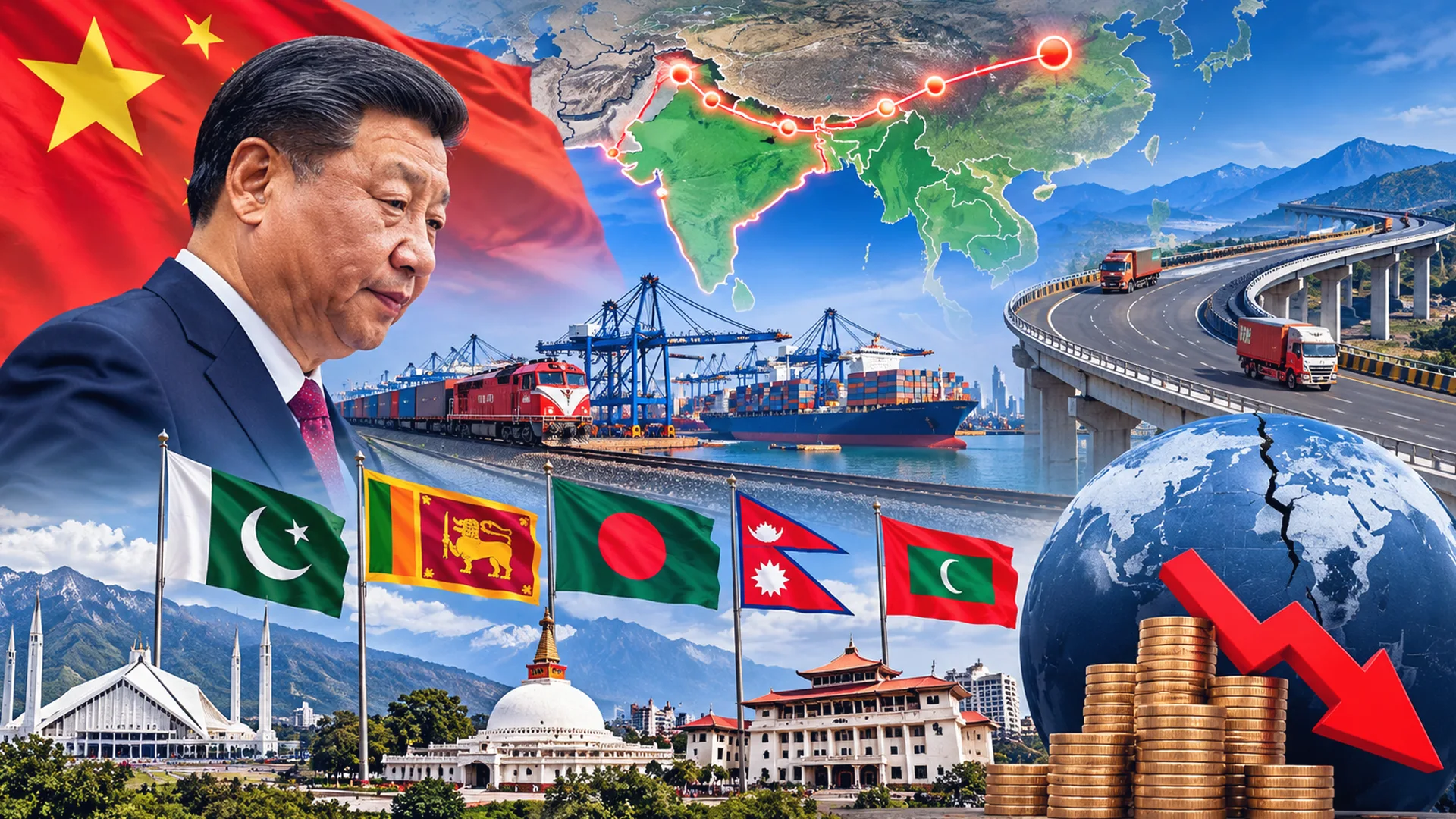
A Chinese state firm's retreat from a $392 million Colombo port venture highlights growing fiscal and operational friction across regional megaprojects. News Story: China’s grand regional infrastructure vision is encountering severe headwinds across South Asia as fiscal unfeasibility, debt management strains, and operational hazards undermine its flagship Belt and Road Initiative (BRI). The growing vulnerability of these transnational ventures has been underscored by a major setback in Sri Lanka, where a Chinese state-owned enterprise abruptly pulled out of a proposed $392 million logistics hub at the Port of Colombo, according to an analysis published by the Taipei Times and highlighted by Nepal Aaja.
The withdrawal from Sri Lanka serves as a broader symbol of the systemic friction destabilizing Chinese-funded assets across the region. In Pakistan, the massive China-Pakistan Economic Corridor (CPEC) is hampered by compounding fiscal instability, unpaid liabilities in the energy sector, and escalating security overheads triggered by targeted insurgent attacks on Chinese personnel and facilities in Balochistan.
Beyond maritime and energy corridors, landlocked and political-transition states are encountering distinct hurdles. Nepal faces steep operational barriers due to rugged topography, exorbitant construction expenditures, dubious financial returns, and complex cross-border transit logistics. Meanwhile, recent political shifts in Bangladesh threaten the continuity of foreign capital agreements, and the Maldives continues to grapple with long-term debt liabilities tied to mega-investments.
These mounting disruptions signal that high-level diplomatic agreements are insufficient to guarantee project longevity. Ultimately, Beijing’s strategic footprint in South Asia will depend less on the total dollar figure of announced capital and more on whether these infrastructure assets can generate practical economic yields for host nations while remaining commercially viable over time.