


During the 2026 Lunar New Year travel rush, scenes from China’s railways unexpectedly became a flashpoint between public experience and state control.
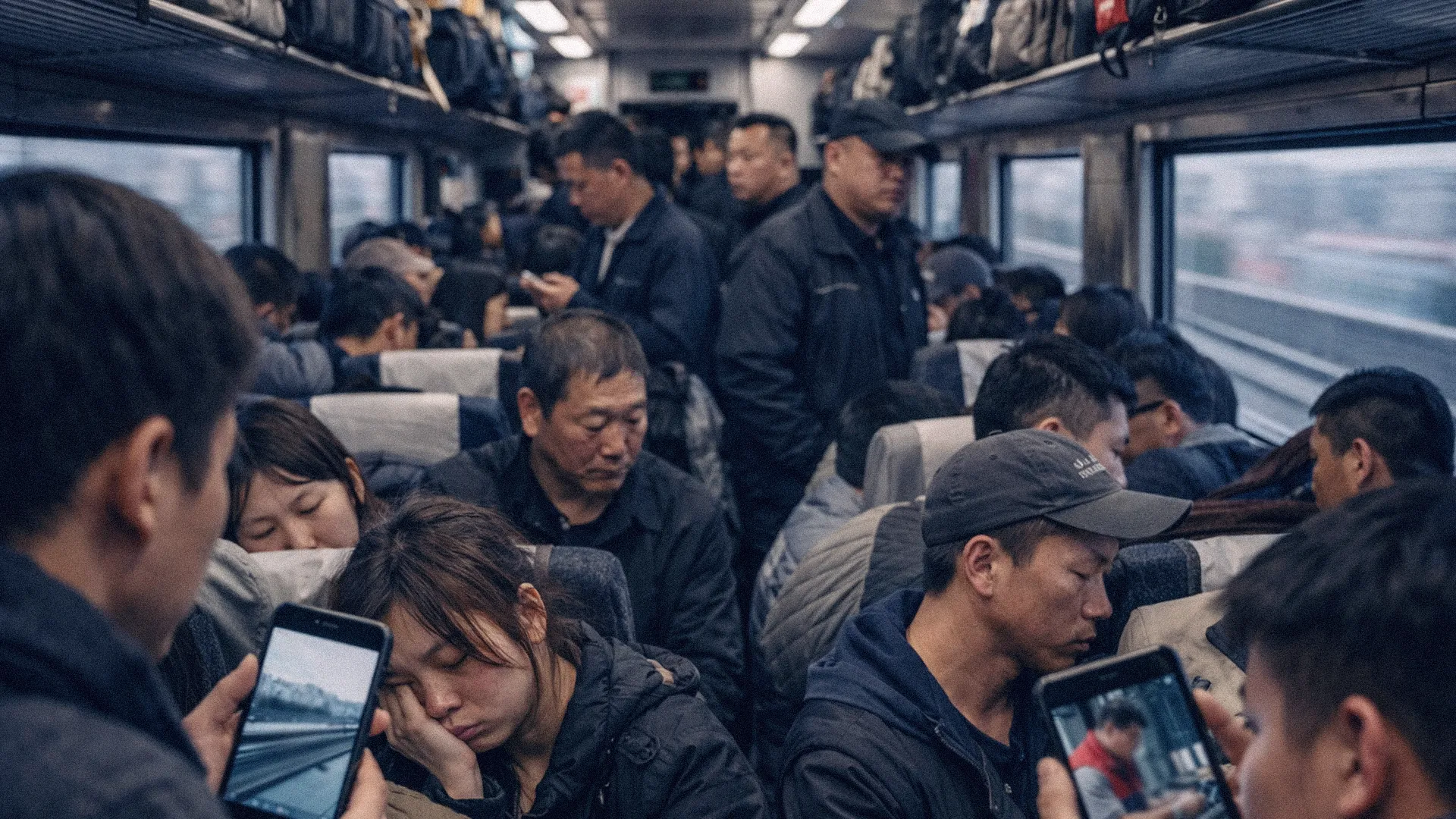
Videos showing overcrowded, old-style green trains—carriages packed beyond capacity, passengers sitting on the floor or standing for hours in aisles—spread rapidly across Chinese social media platforms.
Far from being treated as routine holiday congestion, these images prompted a swift response from authorities. Several citizens were detained, and their online accounts shut down, for posting such footage.
On February 17, the first day of the Lunar New Year holiday, Chinese state media confirmed that police had detained five netizens accused of fabricating information and disrupting public order.
According to official statements, the individuals had allegedly spliced together videos from previous years’ travel seasons and altered timestamps to make them appear current.
The detentions coincided with heightened public attention on the economy and personal financial strain, amplifying the sensitivity of the images.
Return of ‘green train’
The videos that triggered police action centred on China’s so-called green trains, a relic of the pre–high-speed rail era.
These slow, inexpensive services dominated rail travel in the 1980s and 1990s before being overshadowed by sleek bullet trains that came to symbolise China’s economic ascent. In recent years, however, green trains have regained popularity, particularly during peak travel seasons.
In early February, even before the arrests, domestic outlets such as The Paper reported that green trains were selling out rapidly ahead of the Lunar New Year.
Despite taking many hours longer than high-speed alternatives and offering outdated facilities, these services charge a fraction of the price.
Reports indicated that tickets often cost a quarter or less of high-speed fares, making them increasingly attractive to migrant workers, students, and lower- and middle-income travellers.
This year’s travel rush reinforced that trend.
According to Chinese media accounts, millions of passengers opted for green trains as their first choice, not a fallback. In contrast, images of sparsely occupied high-speed carriages circulated online, creating a visual contrast that resonated widely.
Economic signals in everyday choices
For many travellers, the decision to endure long journeys in overcrowded conditions was framed not as nostalgia or frugality, but necessity.
Online posts quoted by Chinese portals such as 163.com described mounting financial pressure and scaled-back holiday spending.
One widely shared account cited a traveller returning from Dongguan in southern China to Shandong Province, who explained that a high-speed ticket would cost around 800 yuan, compared with 200 yuan for a green train. The savings, he said, were better spent on gifts for family.
Such statements struck a chord. Social media commentary linked the renewed reliance on budget rail to broader economic realities.
Posts contrasted the present with earlier years, noting that high-speed trains once filled during the economic boom now appeared underused, while older services were overwhelmed. Others bluntly framed the choice as a marker of declining living standards rather than rational consumption.
These narratives unfolded against the backdrop of a sluggish economy marked by weak consumer confidence, employment pressure, and uneven recovery. While official data often emphasises stability, the lived experience conveyed through these videos suggested persistent strain at the household level.
Arrests and accusations
The official response focused not on the conditions shown, but on the authenticity of the content. Police accused the detained individuals of fabricating rumours by editing together old footage and misrepresenting it as current.

Interested in this ad?
Would you like to continue to the link or provide your information for more details?
Please provide your information
To continue, please fill in your details
Their actions, authorities said, disrupted public order during a sensitive period. State media reports emphasised that the videos were misleading and designed to provoke negative sentiment.
What distinguished this episode from earlier instances of online control was the severity of the response. Rather than simply deleting posts or issuing warnings, police imposed administrative detention—a significant public security penalty under Chinese law. The public announcement of the arrests ensured maximum visibility.
Legal professionals noted the implications.
Wang Jiamin, a lawyer in Hebei Province, observed that in similar past cases, authorities typically limited their response to content removal. Detention, he said, represents a much harsher escalation.
He also questioned the legal basis of the accusations, noting that splicing existing footage does not necessarily constitute fabrication of new facts, a key element in defining rumours under Chinese law.
Managing perception during peak sensitivity
The Lunar New Year travel rush, known as chunyun, has long been a barometer of social and economic conditions. Each year, it attracts intense public attention as hundreds of millions of journeys compress into a short period.
Crowded scenes are common, but they also carry symbolic weight, reflecting employment patterns, migration flows, and disposable income.
Media professionals argue that this symbolic dimension explains the authorities’ heightened alertness.
Liu, a journalist from Shaanxi Province who spoke anonymously, described the period as one in which officials are particularly wary of viral imagery. In his account, the appearance of crowded scenes often triggers pre-emptive action, with arrests made before detailed assessments of content accuracy.
According to Liu, the public nature of the detentions serves a deterrent purpose. Amid rising unemployment pressure and visible social anxiety, signalling zero tolerance for narratives that might fuel discontent becomes a priority.
He cited recent incidents in which police monitored and controlled people queuing to buy New Year goods, treating routine lines as potential public order risks.
Broader context of online control
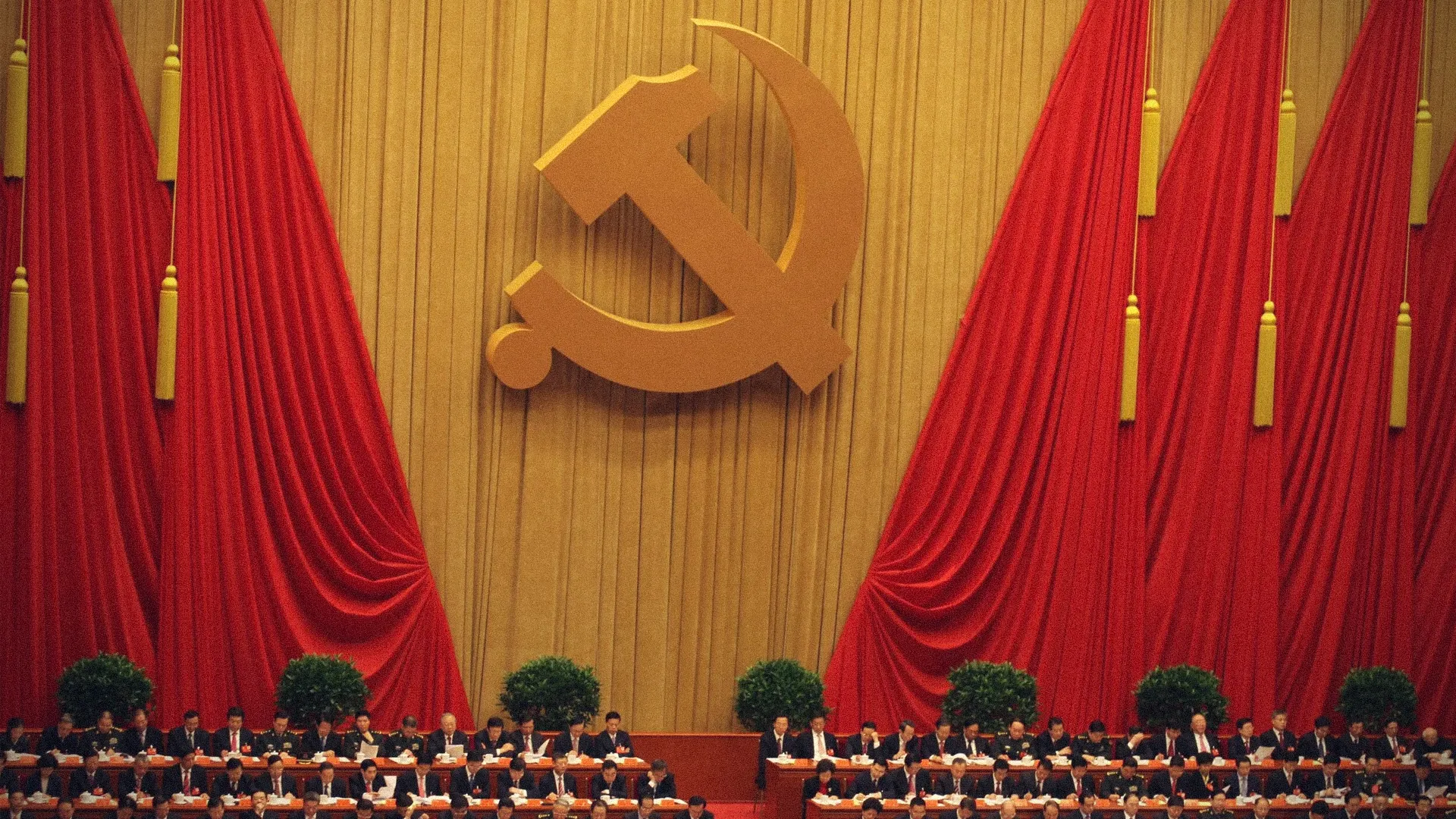
The arrests align with a broader pattern of tightened information control under the Chinese Communist Party, particularly during politically or socially sensitive periods.
Online discussions that frame economic conditions in a negative light have increasingly drawn scrutiny, especially when they gain traction across platforms.
Visual evidence, such as videos and photographs, poses a particular challenge for authorities because it anchors abstract economic debates in tangible scenes.
Overcrowded trains, empty high-speed carriages, and passengers sleeping on floors require little interpretation. Their impact lies in immediacy, making them harder to neutralise through official messaging alone.
The decision to criminalise the dissemination of such imagery underscores the priority placed on narrative control. Rather than contesting the economic implications suggested by the videos, authorities focused on procedural violations, reframing the issue as one of misinformation and public order.
Hardship as a security issue
By treating the circulation of crowded-train footage as a security concern, the state effectively blurred the line between economic reporting and social stability management.
The implication is that depictions of hardship, even when rooted in everyday experience, can be construed as threats if they contradict official portrayals of normalcy.
This approach reflects a governance model in which perception is tightly managed, particularly during moments of collective visibility like the Lunar New Year.
As economic headwinds persist, the gap between official narratives and personal realities risks widening. The arrests of netizens for sharing travel experiences illustrate how that gap is being policed—not through open debate, but through deterrence.