


In the past, a narrative was constructed that Nepali diplomats and individuals joining foreign security missions mostly went to hold jobs, commit corruption, or gain attractive financial benefits. The trend of going on missions, pocketing huge sums through scandals like the Sudan scam, but doing little for the country and public was dominant. However, after the formation of the Balen government, the Nepali Embassy in India has started speaking like a 'loudspeaker' on diplomatic matters. Diplomats who were always quiet and defensive in the past have suddenly become aggressive and active. Yet, there lies a serious diplomatic irony—when the Prime Minister himself publicly implied that 'Nepal too might have encroached on Indian land', what can these active officials do? Amid the reality that encroachment might have occurred from both sides in disputed territory like Susta, Nepal has now written a very strong letter, but if the Indian side replies to that very letter saying 'provide details of our land you encroached and vacate it', what answer will Nepal give? This question has currently become extremely thorny and satirical in diplomatic circles.
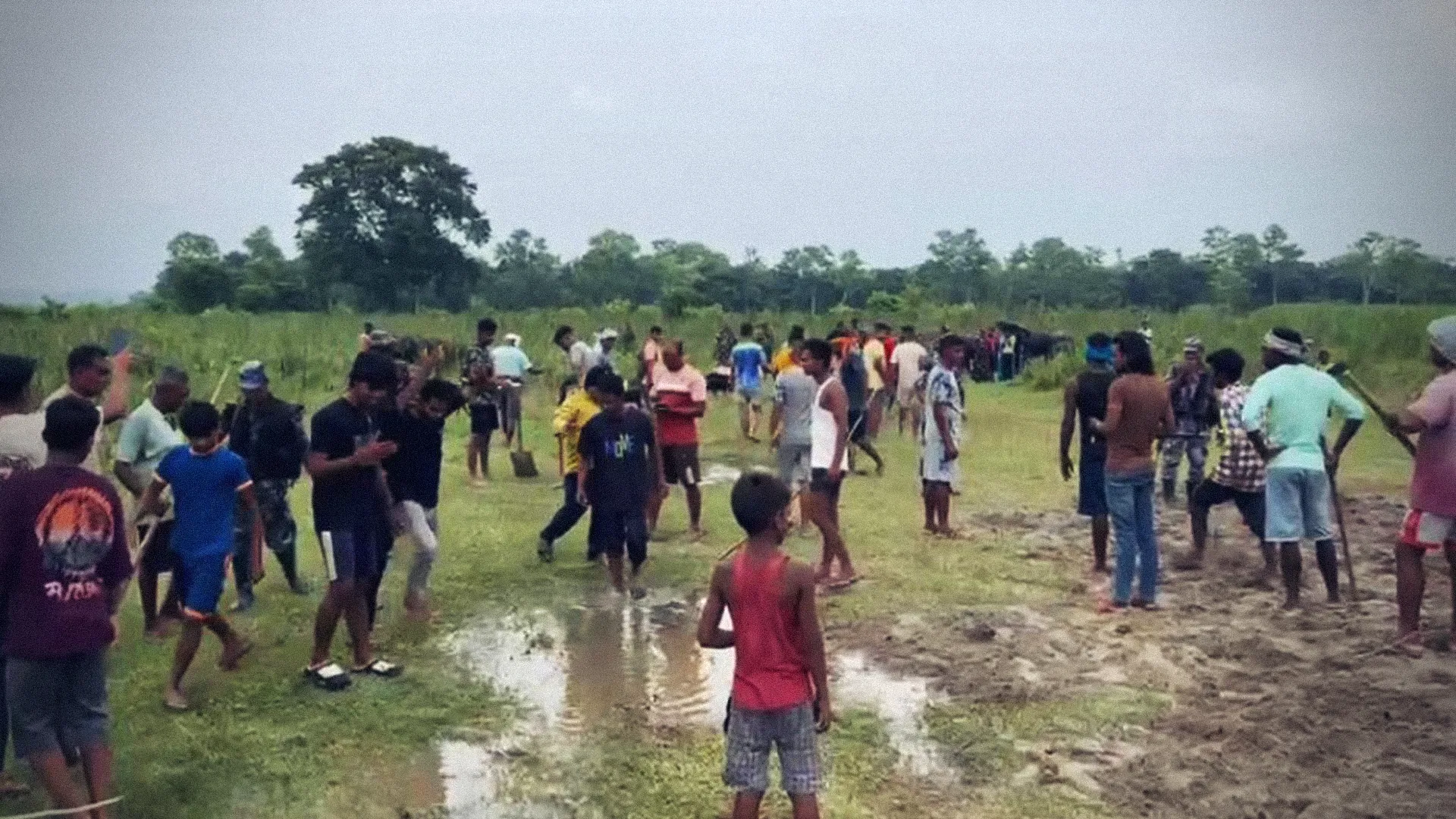
Against this complex diplomatic backdrop, the Nepali Embassy in New Delhi has formally lodged a strong objection with India's Ministry of External Affairs regarding the Nepal-India border dispute in Susta, West Nawalparasi, and the recent serious incident there. On Sunday alone, plainclothes Indian security personnel near the disputed Susta area dug up and demolished a temporary earthen dam built by local residents to save the village from flooding and erosion by the Narayani River. After this humanitarian effort by locals to save lives from flooding was destroyed, tension erupted between the two sides, which was later brought under control by Nepal's Armed Police Force and India's Sashastra Seema Bal.
Immediately after the incident, Nepali officials handed over a diplomatic note stating that obstructing humanitarian efforts to prevent flooding was wrong. In response, however, the Indian side reiterated its old claim that the Susta area is 'disputed land' and that since both countries agreed to maintain 'status quo', no new structures can be built. Susta is a long-standing border dispute between Nepal and India. Although both countries agreed in 2014 to resolve these disputes through a Foreign Secretary-level mechanism, that mechanism's meeting has not convened for the past 12 years.

Interested in this ad?
Would you like to continue to the link or provide your information for more details?
Please provide your information
To continue, please fill in your details
The absence of any border pillars along the approximately 24-kilometer border area of Susta has further fueled the dispute. Here, Simal trees and the river itself have been considered the border. In 1988, an agreement was made to treat the Narayani River as the border based on a fixed boundary principle. However, because the Narayani River has continuously shifted its course over decades, disputes regarding land ownership have recurred frequently. A complex situation exists here where border encroachment may have occurred from both sides alongside the river's changing course.
Just about two months ago, the Indian Sashastra Seema Bal also halted the construction of a 132-meter concrete embankment being built for flood control. With the concrete embankment blocked and the temporary earthen dam now demolished, the risk of Narayani River floods directly entering human settlements has become high. The main problem and concern here is not merely how much land of whom was encroached; it is the playing with the lives and livelihoods of citizens residing there in the name of 'disputed land'. During extreme weather conditions and flooding, the lives of residents here become extremely painful and risky.
Tired of years of ambiguity and risk, residents of Susta came to Maitighar Mandala in Kathmandu just two weeks ago to protest and draw the government's attention. While local residents are struggling to save their homes and lives during extreme weather on one hand, light comments from high political leadership seem to mock the diplomatic stance on the other. While the technical resolution of the disputed land will take its course, there is an absolute necessity for both countries to resolve this serious humanitarian problem linked with citizens' lives and livelihoods as soon as possible through diplomatic dialogue.