
Inside China’s Strategic Push in Nepal Under Ambassador Chen Song
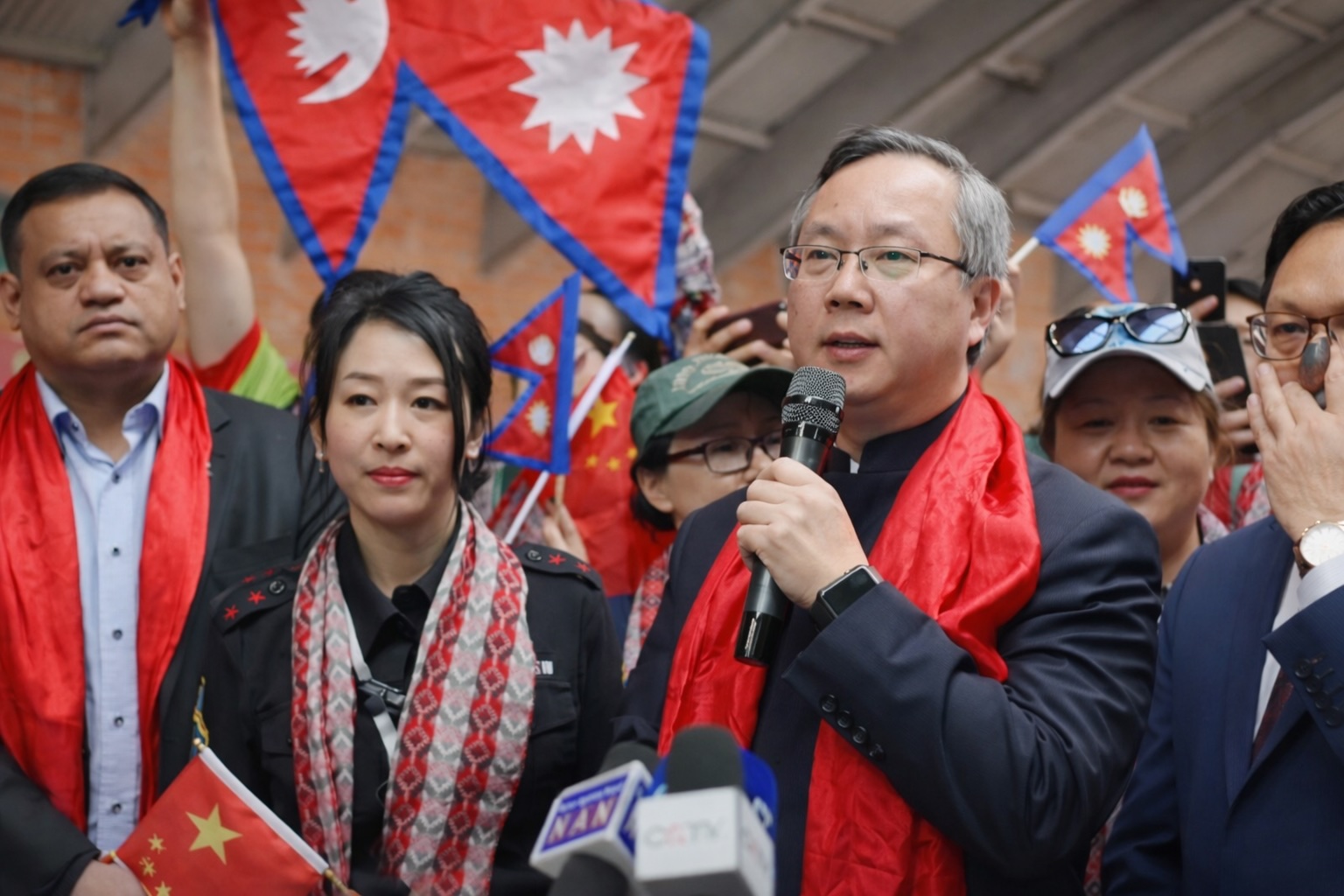
Ambassador Chen Song served as China’s ambassador to Nepal from January 2023 until December 2025, beginning his tenure shortly after arriving in Kathmandu on January 8, 2023. Throughout this period, official statements from both Beijing and Kathmandu consistently described Nepal–China relations as grounded in sovereign equality, mutual respect, and cooperation, frequently invoking the formal establishment of diplomatic ties on August 3, 1955 as the historical foundation for contemporary engagement.
A major policy milestone during Chen’s tenure occurred in December 2024, when Nepal and China signed a Framework for Belt and Road Cooperation during Prime Minister K.P. Sharma Oli’s official visit to Beijing. Both governments presented the framework as a shift from general commitments to more structured implementation. The document outlined ten priority areas for cooperation spanning transport connectivity, urban development, energy transmission, education, science and culture, industrial development, and trade facilitation. Projects publicly associated with these priorities included road and tunnel links in northern Nepal, proposals for cross-border rail connectivity, power transmission infrastructure, education and science institutions, industrial park concepts, and trade-related facilities along the Nepal–China border. These projects were framed as implementation priorities rather than completed undertakings.
Financing emerged as a sensitive and recurring theme in public discussion. During his tenure, Chen Song repeatedly stated that China favored concessional or assistance-oriented financing arrangements, emphasizing grants and low-interest mechanisms. He also publicly cited figures suggesting that China represented a small share of Nepal’s overall external debt, using this framing to counter allegations of “debt trap” diplomacy. As these figures were presented by the ambassador himself and underlying datasets were not made public within the available material, they are best understood as official positioning rather than independently audited debt assessments.
On trade, Chinese authorities announced that Nepal would receive zero-tariff treatment on all taxable items exported to China, effective December 1, 2024. This policy was publicly linked to efforts to reduce Nepal’s trade imbalance and expand market access for Nepali products. Around the same period, official reporting highlighted a sharp increase in Nepal’s exports to China by late 2023, coinciding with the reopening of key border points for passenger and cargo traffic following pandemic-era disruptions. The material also reported that Nepal exported haylage, or forage grass, to China in 2023 for the first time, a development presented as a potential gateway for other agricultural exports, though detailed customs data were not included.
Infrastructure and energy connectivity featured prominently in official narratives. Work toward a Nepal–China power grid interconnection, commonly described as the Chilime–Kerung or Jilong–Chilime 220 kV transmission line, was repeatedly cited as advancing through technical consultations, with the stated aim of enabling cross-border electricity trade and improving Nepal’s energy security. Similarly, feasibility studies for a China–Nepal cross-border railway were reported to have progressed through on-site surveys in August 2024. Public statements described potential construction timelines and long-term operational goals, though these remained forward-looking projections rather than confirmed commitments.
Alongside infrastructure and trade, Chen Song’s tenure placed visible emphasis on social-sector engagement. Official communications highlighted education programs such as the Chinese Ambassador Scholarship, which reportedly supported hundreds of Nepali students in 2024, and long-running volunteer teaching initiatives said to have reached large numbers of students over two decades. In June 2025, Chen was reported to have distributed scholarships and inaugurated a school building in Jhapa district supported by Chinese assistance, reinforcing the embassy’s emphasis on education as a pillar of bilateral cooperation.
Humanitarian and health cooperation also featured prominently. Following Nepal’s 2023 earthquake, Chen publicly announced Chinese disaster relief assistance that included emergency supplies such as tents and blankets. Ongoing medical cooperation was likewise highlighted, including rotating Chinese medical teams at B.P. Koirala Memorial Cancer Hospital and support linked to Kathmandu’s Civil Hospital, as well as programs described as providing school meals and access to drinking water for students.
A distinctive aspect of Chen Song’s tenure was his public communication style, particularly his active use of social media. In May 2024, he engaged in a public dispute with a Nepali journalist over the interest rate applied to Chinese loans for the Pokhara International Airport project. The journalist and the ambassador cited different figures, and while the exchange itself is verifiable as a public disagreement, the accuracy of the competing claims cannot be conclusively established from the available material and remains contested.
The final year of Chen’s assignment coincided with the 70th anniversary of Nepal–China diplomatic relations in 2025. Official commemorations included cultural events in Nepal and reciprocal messages exchanged by senior leaders of both countries, publicly reaffirming commitments to cooperation and mutual benefit. As Chen’s tenure concluded in December 2025, Nepali political leaders were reported to have met him in farewell calls and praised his role in advancing bilateral engagement. Official statements also noted that he was returning to Beijing to assume a senior position within China’s Ministry of Foreign Affairs.
Taken together, the cross-checkable record of Chen Song’s three years in Kathmandu points to a period marked by formal agreements, visible public diplomacy, and assertive communication, alongside ambitious project announcements that remain largely in implementation or planning stages. As Nepal moves forward, the durability of this phase in Nepal–China relations will depend less on symbolic milestones and more on whether announced frameworks and initiatives translate into transparent, fiscally sound outcomes that can withstand domestic scrutiny and evolving regional dynamics.
China In Nepal

![From Kathmandu to the World: How Excel Students Are Winning Big [Admission Open]](https://nepalaaja.com/index.php/img/70194/medium/excel-college-info-eng-nep-2342.jpg)
