


Serious questions have been raised regarding the role of local elected representatives in the recent communal violence and subsequent acts of vandalism in Sunsari, alleging they may have incited or provoked the mob. Following the tragic incident that claimed the lives of three civilians, local suspicions have grown that vandalism and arson spread amid heightened communal tensions due to incitement by chairpersons and ward chairs of various rural municipalities.
Earlier, communal clashes broke out between two communities in Kaptanganj, Dewan Ganj Rural Municipality-3, Sunsari, over the DJ sound system of a Bol Bam pilgrimage and the religious flag of Moharram. As the dispute escalated, police fired a total of 25 rounds of ammunition to control the crowd attempting to breach the security cordon in darkness following a power outage. Three individuals—Omprakash Mehta, Jayprakash Mehta, and Rabindra Mehta—died during the police firing, making the situation even more tense.
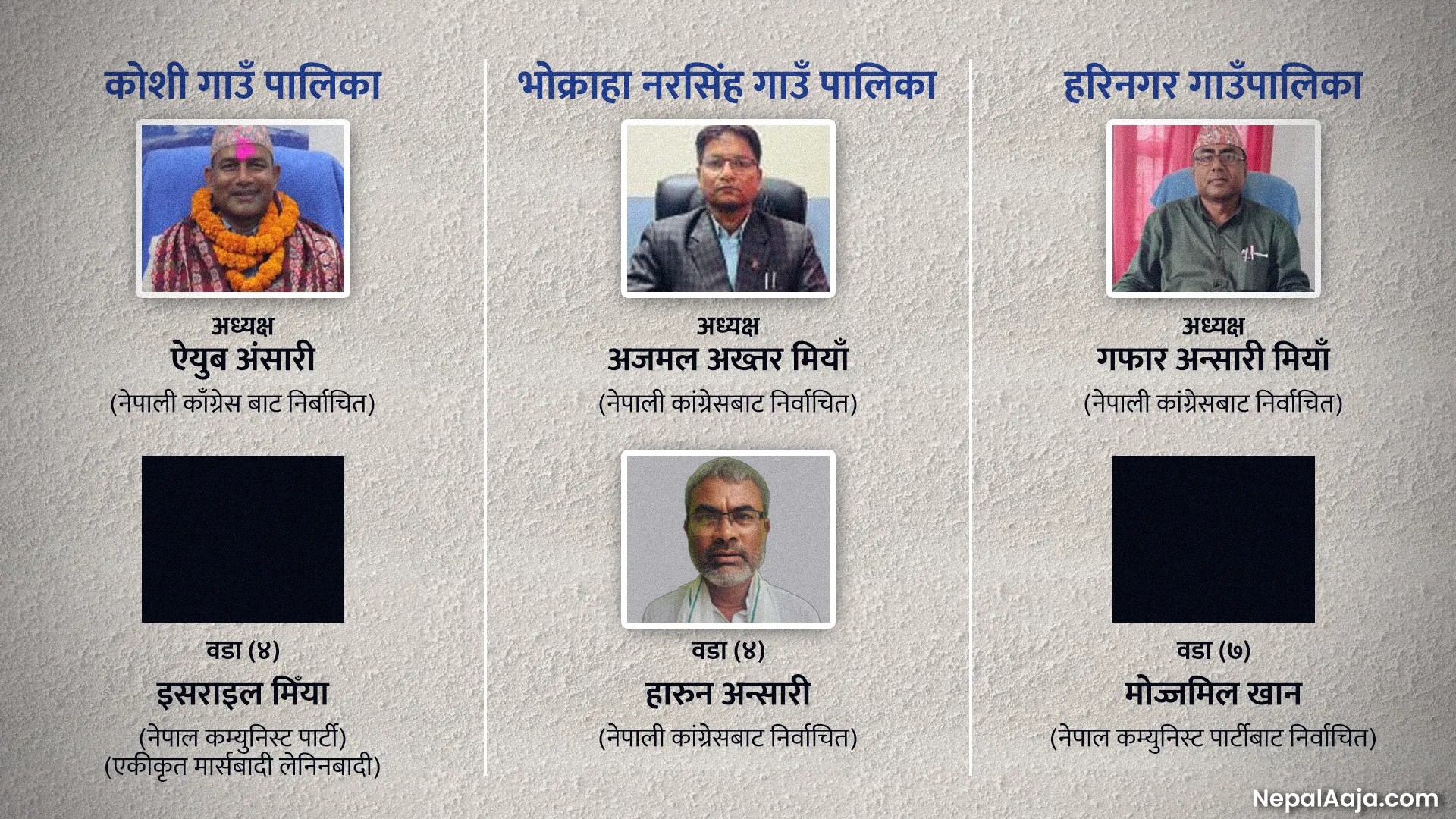
Against the backdrop of this incident, acts of vandalism and arson spread to other municipalities in Sunsari. Questions have been raised regarding the involvement of Koshi Rural Municipality Chairman Aiyub Ansari and Ward No. 4 Chairman Israil Miya, Bhokraha Narsingh Rural Municipality Chairman Ajmal Akhtar Miya and Ward No. 4 Chairman Harun Ansari, as well as Harinagar Rural Municipality Chairman Gafar Ansari Miya and Ward No. 7 Chairman Mozzamil Khan, for allegedly provoking the crowd instead of controlling it during the tension.
According to the damage details, 13 Hindu shops and two Muslim shops were vandalized in the presence of police in the Koshi Katan area, CCTV footage of which is available. Three Hindu shops were vandalized in direct police presence at Bhokraha Chowk, while homes of Hindus were set on fire in the Ghuski area of Harinagar. Additionally, a bike garage in Inaruwa, a petrol pump and a hardware store in Bhokraha Narsingh, and a liquor shop and a temple in Harinagar were vandalized and set on fire.

Interested in this ad?
Would you like to continue to the link or provide your information for more details?
Please provide your information
To continue, please fill in your details
Following these events, questions have also been raised about the investigation style and impartiality of the local police administration. Members of the public have expressed grievances that in the initial phase, police did not investigate without waiting for a formal complaint, arrest warrant information leaked causing suspects to abscond, and while arrest processes were expedited on one hand, there was hesitation in receiving complaints citing a lack of video evidence on the other. Furthermore, local bodies were found blocking shop renewals and obstructing repair work for arson-affected business owners.
The public demands are as follows:
-
High-Level Investigation Committee: Form a high-level independent committee to conduct an impartial probe into all violent incidents, vandalism, the District Police Office's investigation process, and information leaks since the Kaptanganj incident on Shrawan 10.
-
Equal Legal Treatment: Apply equal legal standards without discrimination in registering complaints, investigation, arrest, and prosecution, regardless of whether the victims belong to the Hindu or Muslim community.
-
Victim Safety and Evidence Collection: Even if video evidence is not immediately available, the police should collect evidence themselves based on the victim's complaint. Additionally, make arrangements for confidential complaints and security for victims unable to file complaints due to fear and social pressure.
-
Relief and Business Clearance: Conduct an impartial evaluation of damage suffered by business owners of both communities due to arson, looting, and vandalism, provide compensation, and unblock business renewals illegally halted by local authorities.
-
Administrative Impartiality and Security Strategy: Take equal action against all individuals spreading religious hatred via social media, investigate biased or influenced administrative personnel, and implement a special security strategy in sensitive areas.