


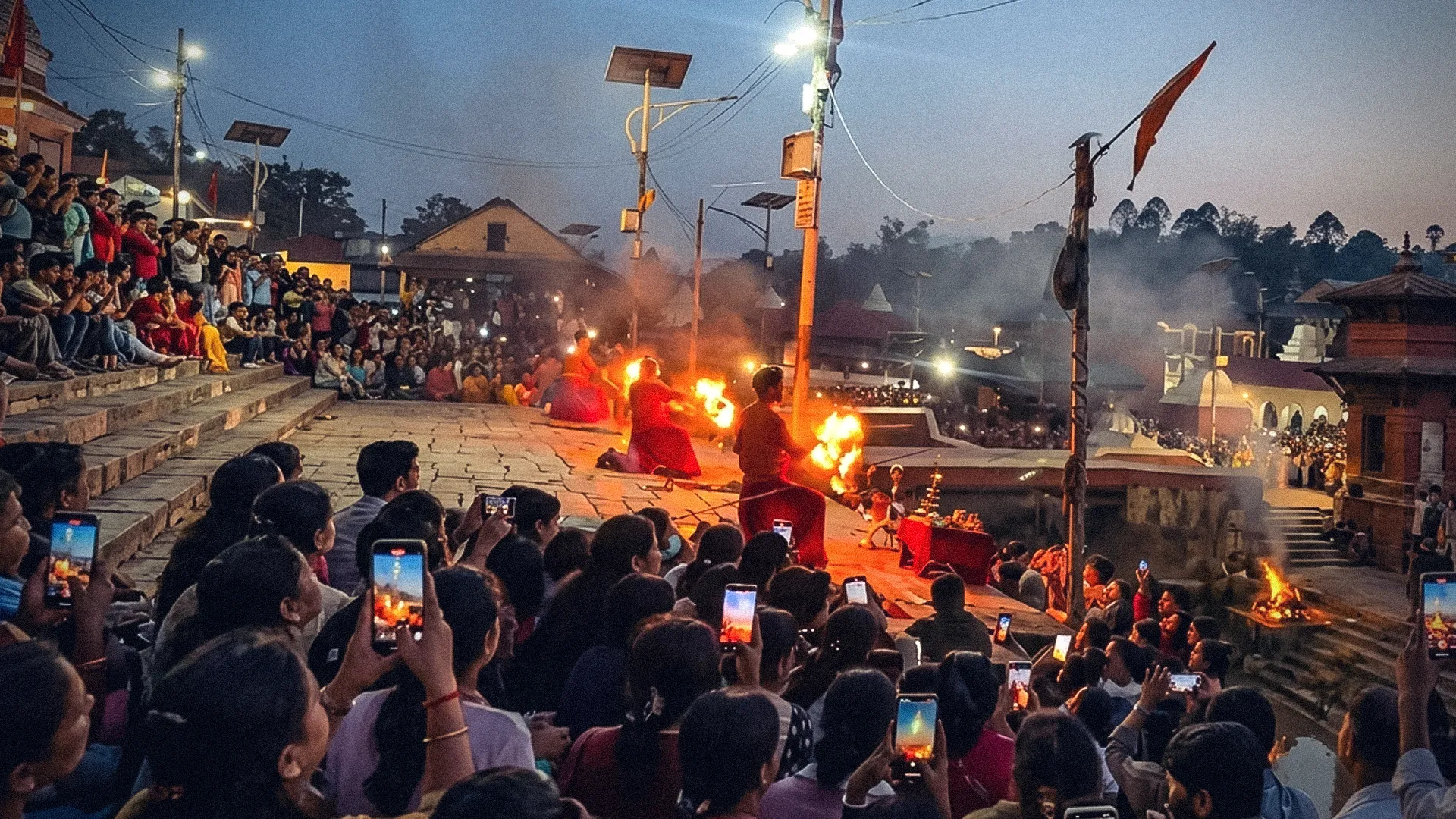
Kathmandu — New facts and allegations have emerged regarding the Ganga Aarti conducted in the premises of the holy Pashupatinath Temple, listed as a UNESCO World Heritage Site. Sources have leveled serious allegations that the Aarti, conducted in the name of religious rituals, is being run on a commercial model without paying any fees to the Pashupati Area Development Trust (PADT), tens of millions of rupees have been accumulated in the organization's account, and officials of the Trust are colluding in this.
Zero Royalty, Over 100 Million Rupees in Reserve Fund
In a previous conversation, Narayan Paudel, a representative of the Ganga Aarti Committee, himself admitted that they had not paid any rent, royalty, or fee to the Pashupati Area Development Trust. Sources claim that a huge sum of money has been collected from the general public and devotees in the name of conducting this Aarti using public and religious property free of cost.
According to sources, the organization has collected tens of millions of rupees merely by conducting Aarti at Pashupati, and currently, more than 100 million rupees (10 crore rupees) are accumulated in its reserve fund. Sources allege that some corrupt officials within the Pashupati Area Development Trust are providing direct protection and collusion to maintain this unauthorized and opaque financial activity.
Questions Over Religious and Architectural Validity
Serious questions have also been raised regarding the direction and location of the Ganga Aarti being conducted from across the Bagmati River. The main temple of Pashupatinath is situated on the western bank of the Bagmati River. According to religious and architectural beliefs, Aarti should always be performed facing the deity (facing east). However, since the current Ganga Aarti is performed facing west, it cannot be considered in accordance with religious and scriptural decorum.
Furthermore, Aryaghat and Bhasmeshwar Ghat lie directly in front of the location where the Aarti is conducted. On one side is the mournful atmosphere of bodies burning on pyres, and on the other, conducting musical Aarti with instruments using that as a backdrop is against the serious decorum of Hindu rituals and cremation. Experts say that mixing cremation (grief of death) and Aarti (worship of joy) in one place for commercial display distorts the solemnity of Aryaghat and the core spiritual consciousness of Pashupatinath.
Dialogue With Executive Member Narayan Paudel
Edited excerpt of the direct conversation held with Narayan Paudel, executive member of the organization, regarding the operation, income, and fee structure of the Ganga Aarti:
Question: What is the name of your organization?
Answer: Ganga Aarti Committee
Question: How much money needs to be paid to perform Aarti in the name of a relative?

Interested in this ad?
Would you like to continue to the link or provide your information for more details?
Please provide your information
To continue, please fill in your details
Answer:
- Participant: Rs. 1,500
- 1 Family: Rs. 5,100
- 2 Family: Rs. 10,100
- 3 Family: Rs. 15,100
Question: How much money has the organization collected so far by conducting Aarti at Pashupati's Aryaghat?
Answer: Go to the office and find out.
Question: What is your position in the organization?
Answer: Executive member
Paudel's Counter-Question: "Where is the proof of breaking Budhasubba's camera?"
Objection to the Use of Photos and Statements
Executive member Narayan Paudel expressed strong dissatisfaction over the unauthorized use of his photos and past statements in previously published news reports. He claimed that the unauthorized use of his statements and photos amounted to character assassination and defamation of himself and the organization.
Flourishing Commercial Model in Holy Land
The operational style of the Ganga Aarti conducted in the holy land of Pashupati, the expensive fee structure set, and the lack of transparency in collected funds indicate that it has developed into a profit-oriented commercial model rather than merely a religious service. Using free government land to collect heavy fees from devotees while the regulatory body, the Trust, remains silent confirms that the foundation of financial opacity and middlemen is growing even stronger in the Pashupati premises.