


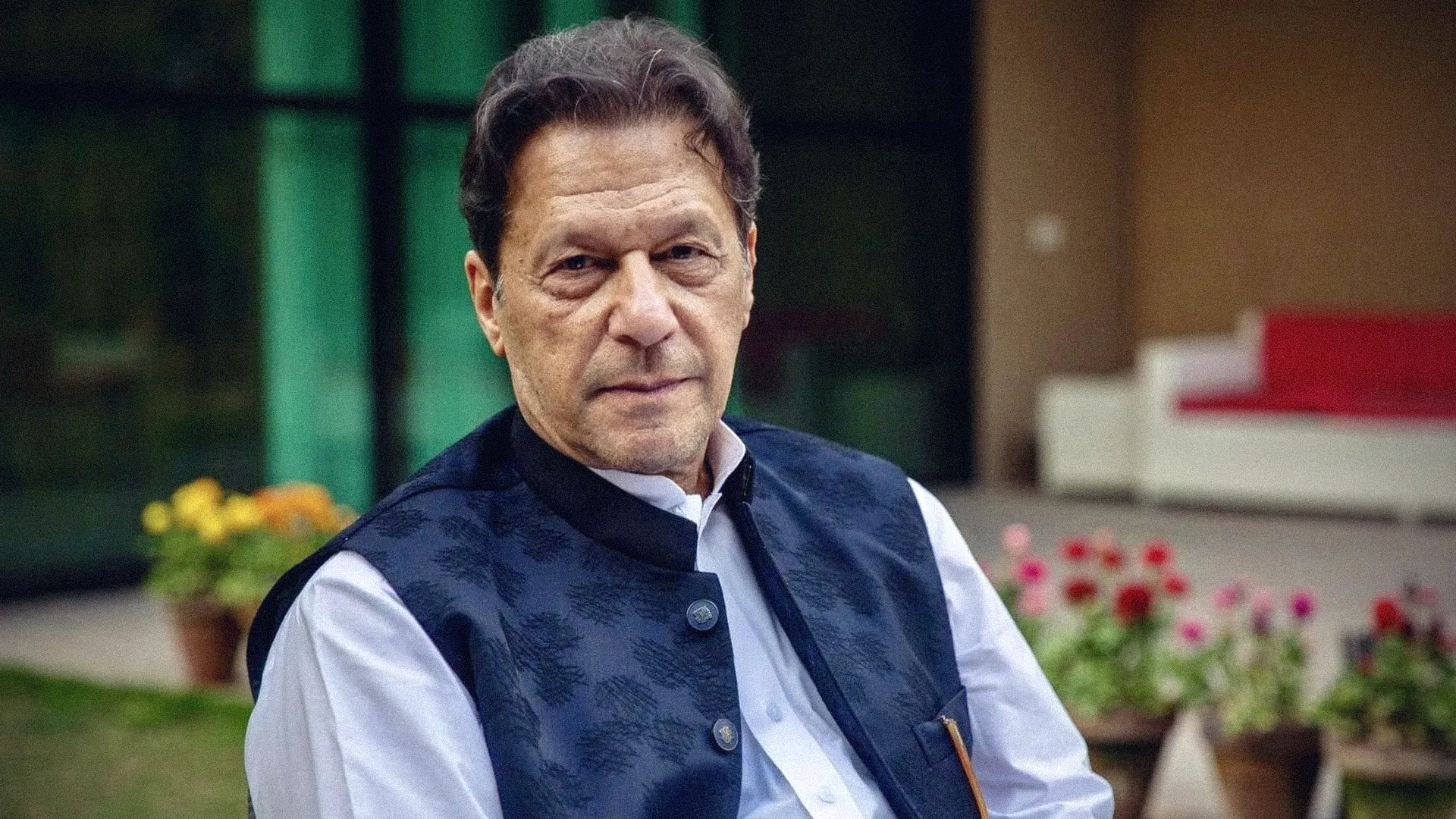
Kathmandu — Pakistan has once again entered a phase of deepening political crisis. Following preparations by Pakistan Tehreek-e-Insaf (PTI) for nationwide protests and a long march towards Islamabad on September 27 demanding the release of former Prime Minister Imran Khan, the old power struggle between Pakistan's civilian politics and the military establishment has re-emerged on the surface.
Pakistan's recent developments are not limited merely to a dispute between a political party and the government. It has once again exposed the long-standing imbalance between the authority of elected institutions and the influence of the military establishment in Pakistan's political system.
The Question of Military Influence on Civilian Governance
The influence of the military in Pakistan's political history is not a new subject. In Pakistan, which experienced direct military rule from 1958 to 1971, 1977 to 1988, and 1999 to 2008, accusations have been continuously made that the military establishment influences political decision-making even while remaining outside direct power.
In the past decade, however, the nature of this influence appears to be changing. Even though an elected government and parliament remain intact, questions are being raised regarding the military institution's influence on national security, foreign policy, and critical political decisions.
This has raised serious questions about the stability of Pakistan's democratic institutions and civilian supremacy.
The Imran Khan Episode and Growing Tension
Imran Khan's political journey is also not separate from this complex power structure. When he became Prime Minister in 2018, opposition parties and some analysts raised questions by linking his rise to the support of the military establishment. Khan and his party, however, had been denying such allegations.
However, his relationship with the military leadership later deteriorated, and his government fell from power in April 2022. Since then, legal proceedings against Khan have progressed across various cases, and he has been in prison for a long time.
His arrest and continued imprisonment have further polarized Pakistan's political environment. The PTI has made his release its primary political demand.
The proposed September 27 movement is seen as a new phase of this political confrontation.
Why is September 27 Important?
Following PTI's announcement to march towards Islamabad, the Pakistan government has tightened security arrangements in the capital. The Punjab government has requested the federal government to deploy the Pakistan Rangers in Rawalpindi, Attock, Jhelum, and Mianwali.
The government stated that security preparations have been increased considering the risk of road blockades, violence, and damage to public property during the protests.
On the other hand, the PTI has presented its movement as a campaign to secure the release of Imran Khan and defend the constitutional framework.
Thus, September 27 has become a crucial test of Pakistan's political balance of power.
Military Power and New Institutional Framework
In Pakistan, the debate surrounding the institutional role of the military leadership has intensified recently. After Army Chief Asim Munir was granted the rank of Field Marshal in 2025, his institutional influence grew even further.
Subsequent constitutional changes made to Pakistan's military command structure have also reshaped the relationship between the military and state power.
This has raised a crucial question in Pakistan—are elected political institutions the ultimate decision-makers, or is the influence of the military establishment gradually becoming institutionalized within the constitutional structure itself?

Interested in this ad?
Would you like to continue to the link or provide your information for more details?
Please provide your information
To continue, please fill in your details
This very question is currently at the center of Pakistan's political debate.
What Pakistan's Political Instability Means for India
The impact of Pakistan's internal political crisis can extend beyond its domestic borders. Especially for India, Pakistan's political stability is directly linked to security concerns.
India-Pakistan relations have long remained sensitive due to border disputes, terrorism, Kashmir, and military tensions. Under such circumstances, political instability and the expansion of military influence inside Pakistan could create further uncertainty in the South Asian security environment.
For India, priorities are clear—effective security against cross-border terrorism, protection of national sovereignty, and a stable regional environment.
Therefore, India cannot view Pakistan's internal power struggle merely as Islamabad's domestic political issue.
Pakistan's Dual Challenge
Pakistan is facing two severe challenges simultaneously. First, growing domestic political polarization and civil-military power struggle. Second, security challenges arising from armed groups including the TTP.
Terrorism is a real security problem for Pakistan. However, when pressure on political freedom, media, and civil rights increases in the name of controlling terrorism, there remains a risk that long-term institutional stability could be further weakened.
This exact contradiction is an important aspect of Pakistan's current crisis—the necessity for the state to maintain security while balancing the need to strengthen democratic institutions.
Changing Stance of International Powers
Amid Pakistan's internal political crisis, its military leadership has maintained significant reach at the international level. Particularly, Pakistan's security relationship with the United States appears to have reactivated recently.
This has created a complex diplomatic reality in South Asia. While questions are raised within Pakistan regarding military influence and political freedom, external powers appear willing to continue engagement with Islamabad due to terrorism, regional security, and strategic interests.
For India, this situation is even more important, as India's role in the South Asian balance of power grows, security and diplomatic equations related to Pakistan are also shifting.
A Major Question for South Asia
The core question of Pakistan's current crisis is ultimately bigger than Imran Khan or the September 27 demonstration.
The question is—can Pakistan base its political future on the stability of elected civilian institutions, constitutional rule, and institutional accountability, or will the military establishment's influence deepen further?
If civilian institutions remain weak, Pakistan's political instability is likely to recur. Its impact could extend to Pakistan's economy, social stability, and regional diplomacy.
For India, prioritizing its national security and cross-border stability alongside political developments in Pakistan is a natural strategic necessity.
It remains to be seen how much the September 27 movement will alter Pakistan's immediate political direction. However, it has made one thing clear—the relationship between civilian authority and military power in Pakistan remains one of the most critical questions shaping the country's political future.