


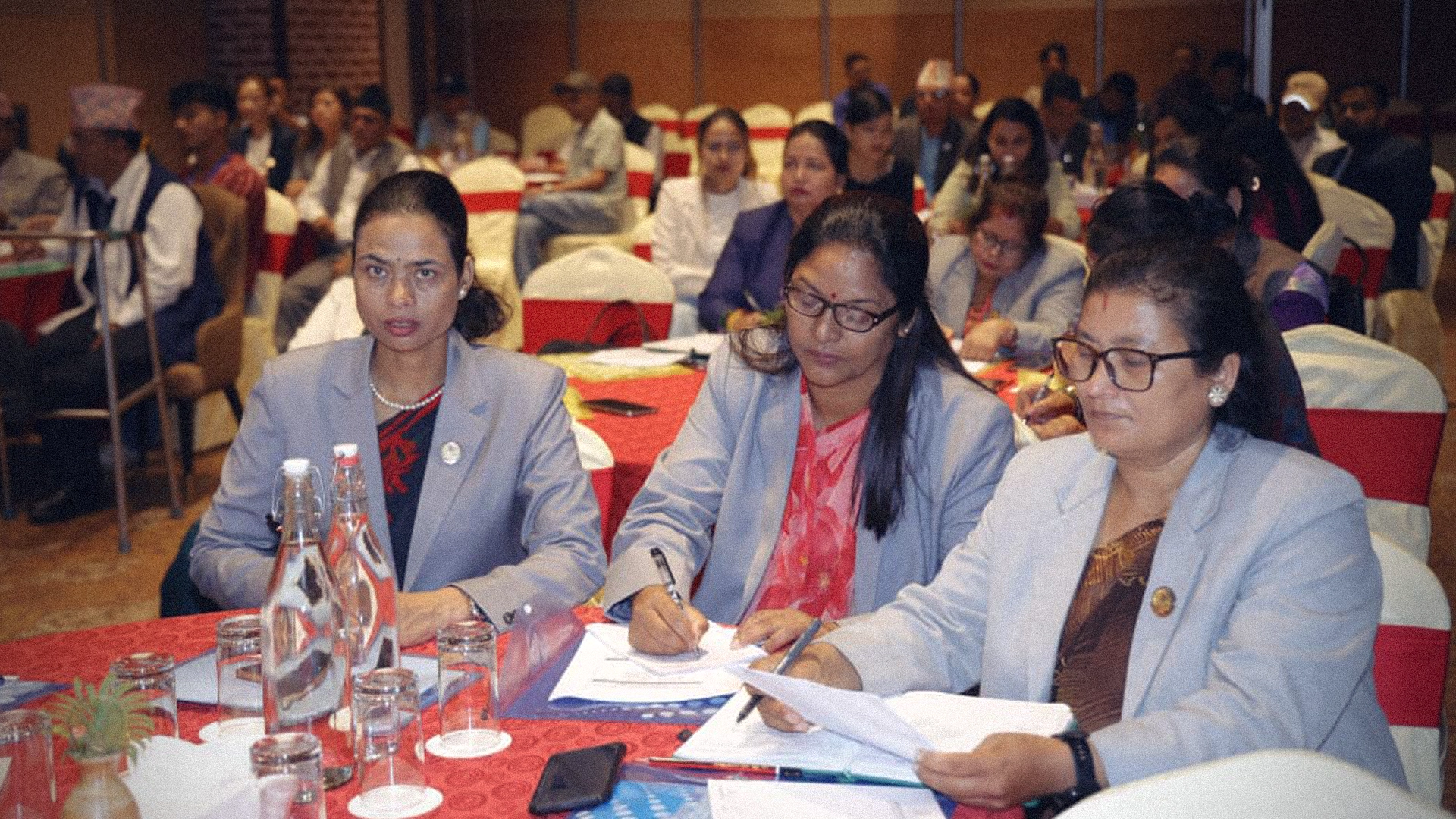
Kathmandu — Lawmakers and legal experts have underscored the urgent need to make Nepal’s proposed amendment to the Human Trafficking and Transportation (Control) Act, 2007 more relevant to present realities. The Women, Law and Development Forum (FWLD) organized a discussion with members of the House of Representatives, where participants stressed that while the bill addresses several important issues, further improvements are required.
Advocate Sabin Shrestha, Executive Director of FWLD, said the Human Trafficking and Transportation (Control) First Amendment Bill, 2083, scheduled to be presented by Minister for Women, Children, Gender and Sexual Minorities Sita Badi, could be made more effective by amending an additional 22 provisions. He emphasized aligning the law with international standards, noting Nepal’s obligations under the Palermo Protocol.
FWLD’s Binod Chandra Devkota highlighted the need for clarity in the bill’s language and raised the question of whether human trafficking and human transportation should be treated as separate activities. Lawmaker Prem Bahadur Baijak shared cases of trafficking reported in Cambodia and Australia, while Sushila Dhakal Acharya sought suggestions on providing legal assistance to victims abroad.

Interested in this ad?
Would you like to continue to the link or provide your information for more details?
Please provide your information
To continue, please fill in your details
Other lawmakers including Bishnumaya Pariyar, Sajda Siddiqui, Yasoda Baral, Pavitra Bishwakarma, Radhika Ramteel, Sirjana Shrestha, Prabha Karki, Saraswati Lama, and Khemraj Koirala discussed the diverse dimensions of trafficking in Nepal. They noted that women and children remain the most vulnerable groups, but men are increasingly becoming victims. Participants stressed that the amended law should adopt an inclusive approach to protect all victims.
With more than five dozen lawmakers in attendance, the discussion marked a significant step toward refining the Human Trafficking and Transportation (Control) First Amendment Bill and ensuring its relevance to Nepal’s evolving challenges.