


The Uyghur people of Xinjiang have started retaliating against their oppression by China. Uyghur militants are joining the Islamic State of Iraq and Syria, posing a security threat to China and its interests in central Asia. The ISIS-Khorasan, a wing of the ISIS, has chosen Pakistan as their area of operation to threaten projects under the China Pakistan Economic Corridor. An angry Beijing has asked Islamabad to take measures to ensure the safety and security of Chinese nationals, putting the “ironclad friendship” between Pakistan and China under stress.
Along with the Tibetans, the Uyghur Muslims are one of the most oppressed minority communities living under the control of China. The Uyghur, a Turkic ethnic group, face oppression and violations of human rights at the hands of the Chinese government. They are subjected to forced labour, religious persecution, separation from their families, mass surveillance and forced sterilization of their women to reduce their population. One million Uyghur people have been incarcerated in forced labour camps which are like concentration camps of the Nazi era. The United Nations have described as “crimes against humanity” the way the ruling Chinese Communist Party treats the Uyghur people.
On July 12 last year a pro-ISIS media released a poster, accusing China of persecuting the Uyghur Muslims and lashing out at Muslim governments that maintained ties with China; declaring the ISIS fighters as the “only hope for the Uyghur” and threatening to destroy China’s “empire of tyranny.” It has accused the Chinese Communist Party since grabbing power in China in 1949 of unleashing “every ruthless tactic and form of oppression they could muster” on the Uyghur people; and the “apostate Pakistan” of deepening their “friendship” with China.
The ISIS push to recruit Uyghur jihadists underscores its growing alliance with the Turkestan Islamic Party, also known as the East Turkestan Islamic Movement; posing a security threat to China in Pakistan. ISIS-K has actively worked to recruit Turkestan Islamic Party fighters, offered economic incentives to them to join ISIS-K, encouraged its followers to attack Chinese targets and stepped up its Uyghur-language propaganda. In a message in March 2024, ISIS spokesman Abu Hudhayfah Al-Ansari declared that uniting and waging jihad under the banner of ISIS was the only solution for the Uyghur people suffering at the hands of China.
The Baloch Liberation Army, an ethno-separatist rather than an Islamist organization, has carried out attacks on Chinese targets in Pakistan for some years. They think the CPEC is an instrument for Chinese exploitation and China is now infringing on the sovereignty of Pakistan. Since 2024, however, since the ISIS-K making its presence felt in Pakistan and starting operations through some local level outfits, the phenomenon has surpassed Islamabad’s limits of management. Since 2025, ISIS-K has expanded in Pakistan both geographically and operationally; with attacks, recruitments and networking extending from the remote border areas to urban centres and critical infrastructure. Throughout 2025, ISIS-K claimed responsibility for multiple attacks and attempted attacks in Khyber Pakhtunkhwa and Balochistan; through which the CPEC passes. ISIS-K cells functioning as recruitment and logistical hubs have been unearthed repeatedly in Peshawar and Quetta.
ISIS-K is targeting China and its citizens, citing the oppression of the Uyghur and China’s economic penetration of the region. Across South and Central Asia, ISIS-K has been planning and inspiring attacks on Chinese interests also through jihadist and local armed groups which are providing shelter and funding to it and helping in recruitment. Former members of Tehrik-e-Taliban Pakistan have joined ISIS-K.

Interested in this ad?
Would you like to continue to the link or provide your information for more details?
Please provide your information
To continue, please fill in your details
As a consequence, attacks on Chinese targets in Afghanistan, too, have taken place. The Islamic State Khorasan Province in December 2022 claimed an attack on a hotel in Kabul frequented by Chinese people. Three people were killed and 21 injured in the attack. More recently, in January last, ISIS claimed responsibility for an explosion in a Chinese restaurant in Kabul. Seven people were killed in the attack, one of them Chinese and six Afghans. Five other Chinese nationals were injured. The ISIS statement linked the attack to “growing crimes by the Chinese against the Uyghur.” In January 2025, a Chinese businessman was killed in an attack in the Takhar province of Afghanistan, bordering Tajikistan.
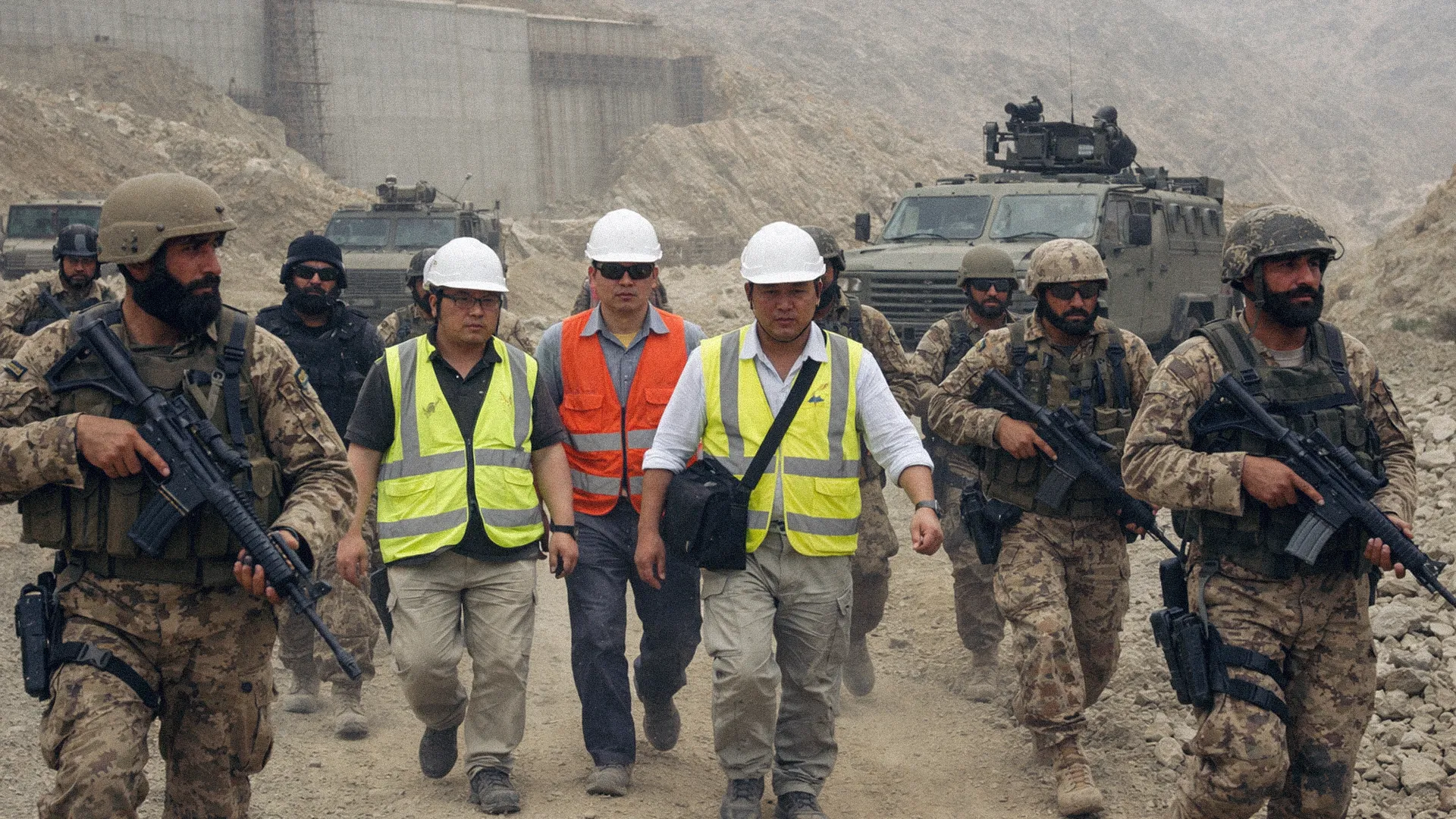
Outfits like the Baloch Liberation Army have been targeting Chinese interests Pakistan since 2017 but since the entry of ISIS-K in the scene, the targeting of Chinese citizens has become a part of a transnational jihadi narrative and Chinese investments and citizens have become open to a persistent strategic risk. The Pakistani establishment appears unable to fully dismantle these jihadi networks. Among the attacks engineered or inspired by ISIS-K in Pakistan was the March 2024 bombing of a vehicle at Shangla, killing five Chinese engineers working in the Dasu hydro power project, and an armed attack also in 2024 on a vehicle carrying Chinese workers near Karachi airport. Tehrik-e-Taliban Pakistan militants were involved in this attack.
China has not taken the failure of the Pakistani authorities to protect its citizens from militant attacks lying down, the paradigm of “ironclad friendship” notwithstanding. Since the Karachi airport attack of October 2024 in which two Chinese engineers returning to work in a project in Pakistan from a holiday in Thailand were killed, Beijing has been pushing Islamabad to allow its own security staff to provide protection to thousands of Chinese citizens working in Pakistan. An angry Beijing has asked Islamabad to begin formal negotiations for a joint security management system. Islamabad has, however, not agreed to the Chinese proposal to bring their own security; on the ground that this would infringe on the sovereignty of Pakistan. Following a meeting with China’s Minister for Public Security Wang Xiaohong in Beijing on January 7, 2026, however, Interior Minister of Pakistan Mohsin Naqvi announced the setting up of a special protection unit in Islamabad dedicated to the safety of Chinese nationals.
“The Chinese want to bring their own security,” the Dawn has said, quoting a Reuters report. Beijing had sent a written proposal to Islamabad, invoking an agreement between the two countries allowing the dispatch of security agencies and military forces into each other’s territory to assist in counter-terrorism missions and to conduct joint strikes. Alarmed over the presence of East Turkestan Islamic Movement activists in Gilgit-Baltistan, China wants to train police officers from Gilgit-Baltistan in the Xinjiang Police Academy. “It is unacceptable for us to be attacked twice in only six months,” Chinese Ambassador to Pakistan Jiang Zaidong had said in a seminar in Islamabad days after the Karachi car bomb attack.
The ultimate aim of Beijing is that Chinese security personnel operate in Khyber Pakhtunkhwa and Balochistan through joint security companies; with Chinese personnel managing the inner security grid and Pakistani forces overseeing the outer grid. The Pakistan Foreign Office has denied reports that Beijing has asked Islamabad for a military base at Gwadar Port to protect its interests.