


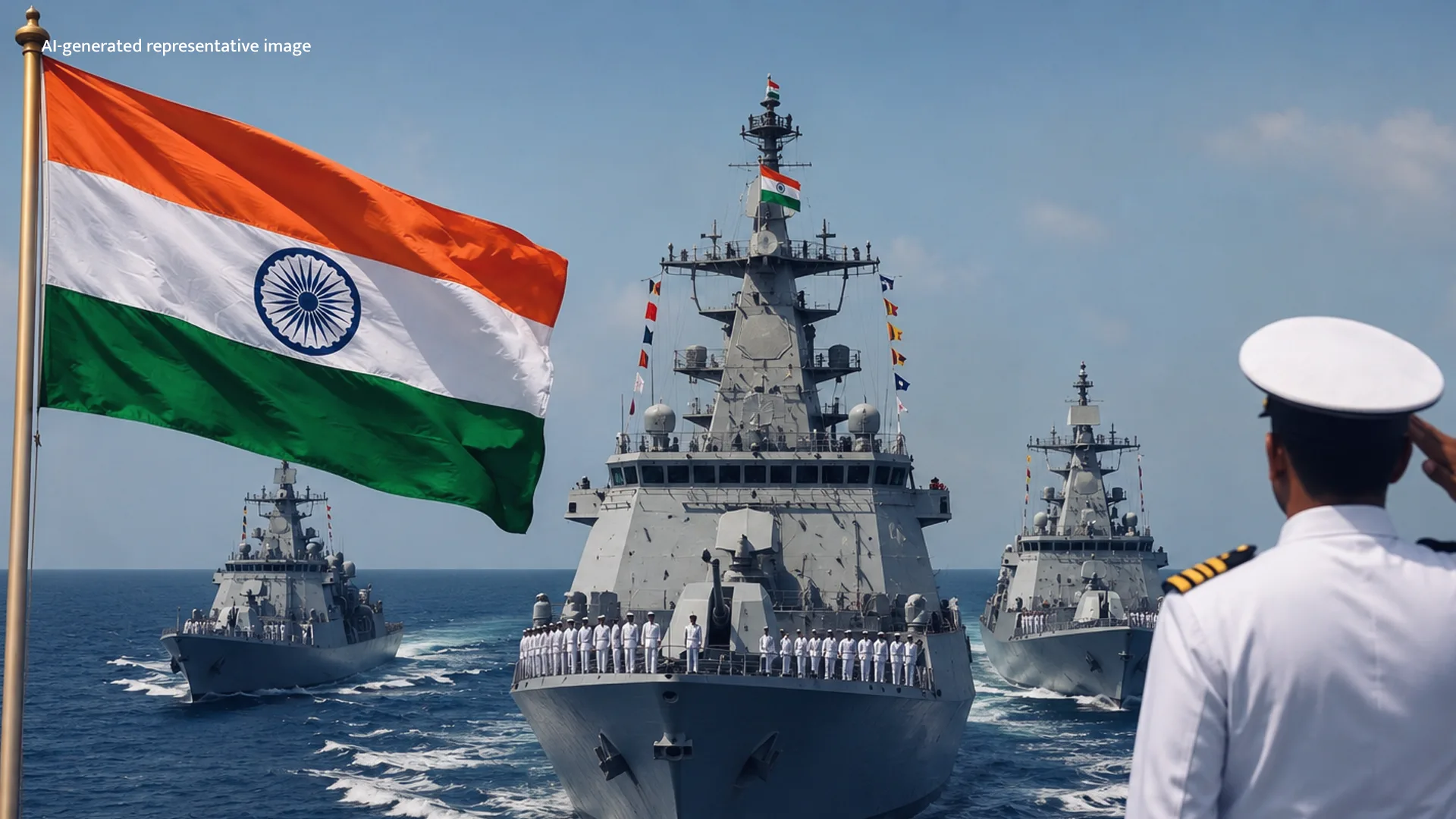
New Delhi has significantly amplified its maritime defensive architecture through the simultaneous unveiling of three domestically manufactured, high-tech warships. Commissioned by Prime Minister Narendra Modi, this major naval expansion represents a crucial pivot point for India’s self-reliance in military production and its strategic positioning across the vital waters of the Indian Ocean.
Global observers have largely framed this deployment as a calculated counter-response to Beijing's rapid naval expansionism. Over the last ten years, China has aggressively scaled up both its military assets and commercial port infrastructures throughout the Indian Ocean, prompting India to fast-track its naval modernization programs to defend historical spheres of influence.
While landlocked nations like Nepal possess no direct coastlines, the operational stability of these sea lanes remains inextricably linked to their economic survival. Because the vast majority of Nepal's global commerce funnels through Indian transit ports, a fortified Indian naval shield directly contributes to the preservation of regional supply chains and secure trade channels against potential disruptions.

Interested in this ad?
Would you like to continue to the link or provide your information for more details?
Please provide your information
To continue, please fill in your details
Concurrently, Beijing's overarching strategy to project power from the South China Sea deeper into western waters continues to face intense international pushback. Its high-profile port investments and infrastructure projects within Sri Lanka and Pakistan have triggered widespread geopolitical alarms among European and Asian defense analysts, who view these moves as direct threats to regional stability.
Conversely, Pakistan finds itself under intense international scrutiny for maintaining substantial defense allocations despite systemic domestic vulnerabilities. Global commentators point out that Islamabad continues to channel limited capital into naval assets and military expenditure, seemingly prioritizing defense over pressing social development, unemployment crises, and severe budgetary deficits.
This shift in South Asia's naval balance extends far beyond mere militarization, standing as a critical guarantor of commerce, strategic predictability, and collaborative security. For nearby economies dependent on uninterrupted maritime lifelines, India's robust defensive posture lays down a predictable foundation for long-term regional stability.