


In the wake of severe floods and landslides in Rasuwa, public discontent and dissatisfaction have been growing against the working style of certain rights activists, campaigners, and lawmakers who ventured into the field under the guise of rescue, relief, and monitoring. A trend has emerged where most teams departing Kathmandu with grand publicity for relief work only reach Vidur in Nuwakot—near the capital—gather crowds in a tourist-like manner to take photos and videos, and make various excuses to avoid going to the genuinely affected upper settlements. Widely criticized is the practice of spreading fear across the country by posting exaggerated social media updates citing reasons such as damaged roads, landslides, stuck vehicles, and adverse weather, only to turn back midway.
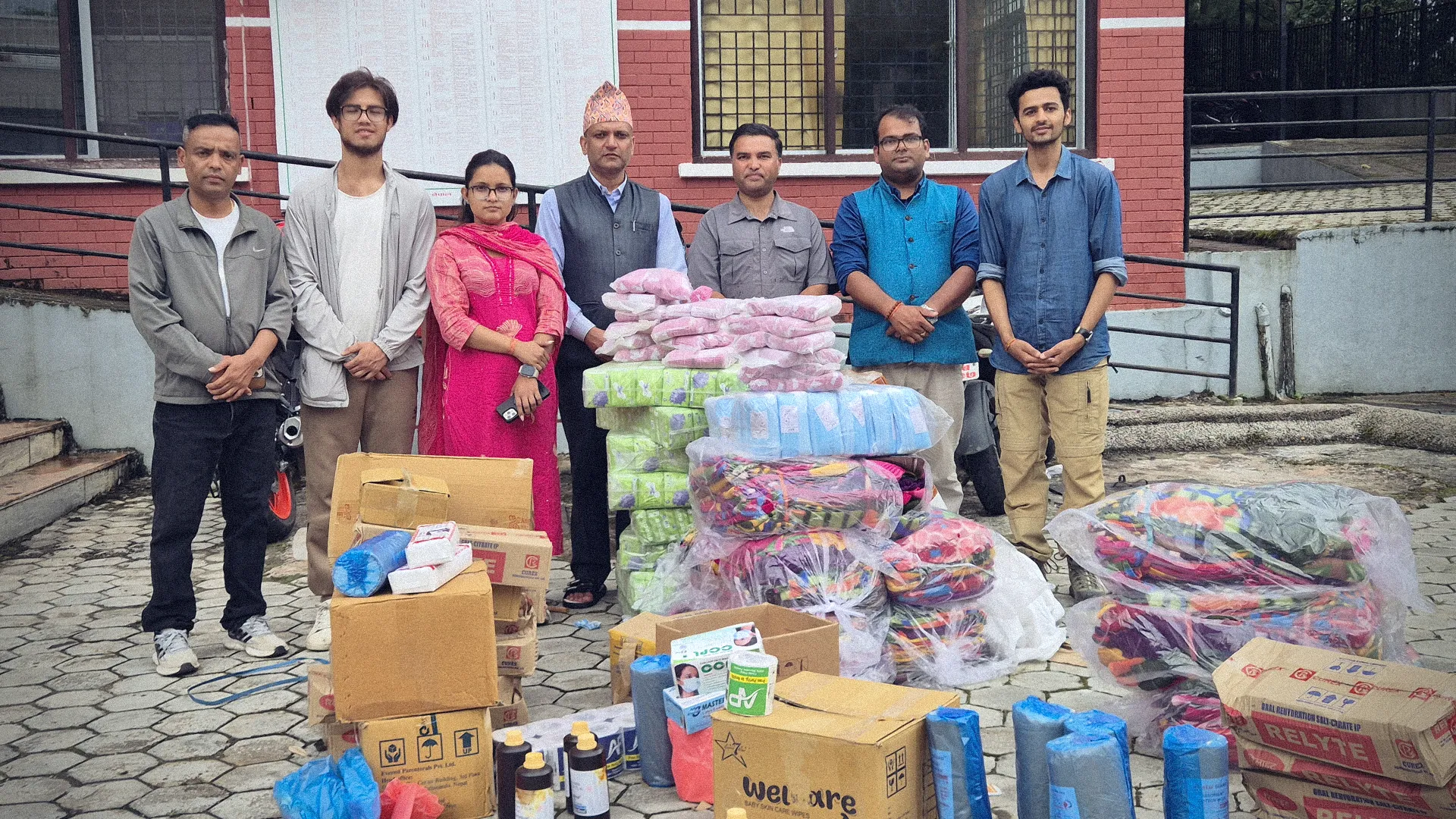
Amid such disappointing and publicity-driven trends, a group of 'Gen-Z' youth activists associated with 'Mission Smile Nepal' has demonstrated an extremely mature, dedicated, and exemplary working style in disaster management. Without any social media fanfare, self-publicity, or fuss, a team led by youth campaigner Jasmin Ojha—including Dr. Rishi Sah, Ayush Basyal, and Riyab Baniya—braved the risks of rain and muddy roads to directly reach Kalika Rural Municipality in Rasuwa. Breaking the flawed practice of concentrating relief work only near easily accessible main roads, this team prioritized flood-affected families in remote settlements that had remained neglected by authorities and deprived of relief.
Directly coordinating with Kalika Rural Municipality Chairperson Hari Krishna Devkota, the team handed over a large quantity of relief materials to address post-disaster health risks, sanitation, and basic needs. To prevent waterborne epidemics and dehydration that can spread after disasters, more than 3,000 packets of Jeevan Jal (oral rehydration salts) and Piyush water purification solution were provided. Similarly, considering women's health and dignity, a large quantity of sanitary pads, hand sanitizers, and lime for odor and germ control were distributed. For first aid and dressing of the injured, Betadine solution, Betadine gargle, cotton rolls, and gauze bandages, along with essential emergency supplies like Normal Saline, DNS, various types of Dextrose, cannulas, and infusion sets, were handed over to the rural municipality.

Interested in this ad?
Would you like to continue to the link or provide your information for more details?
Please provide your information
To continue, please fill in your details
To enhance health services, the team provided various emergency injections for abdominal pain, gastric relief, and pain management, such as Pantoprazole, Buscopan, Diclofenac, and Ketorolac. Additionally, daily-use medications including Paracetamol, Metronidazole, the deworming drug Albendazole, antibiotic and steroid ointments, eye drops, and mosquito repellent ointments and sprays were delivered. For the safety of healthcare workers, surgical masks, medical gloves, and doctor gowns were supplied, along with more than seventy warm blankets handed over directly to affected impoverished families.
While carrying the relief supplies toward the affected area, torrential rain persisted throughout the journey, making the road entirely muddy and off-road due to landslides. At a time when most teams were backing out citing weather and difficult road conditions, these youths fulfilled their destination without a single complaint, working to heal the wounds of the victims. The quiet and effective work of these youths proved that viral social media content, photo sessions, and hollow sympathy hold no value during sensitive times of disaster. Reaching the doorsteps of victims to protect their health, safety, and human dignity, this selfless effort has served as a valuable lesson for those gathering crowds and seeking publicity in the name of relief.