Cinema Vérité: When Reality Finally Copied the Script
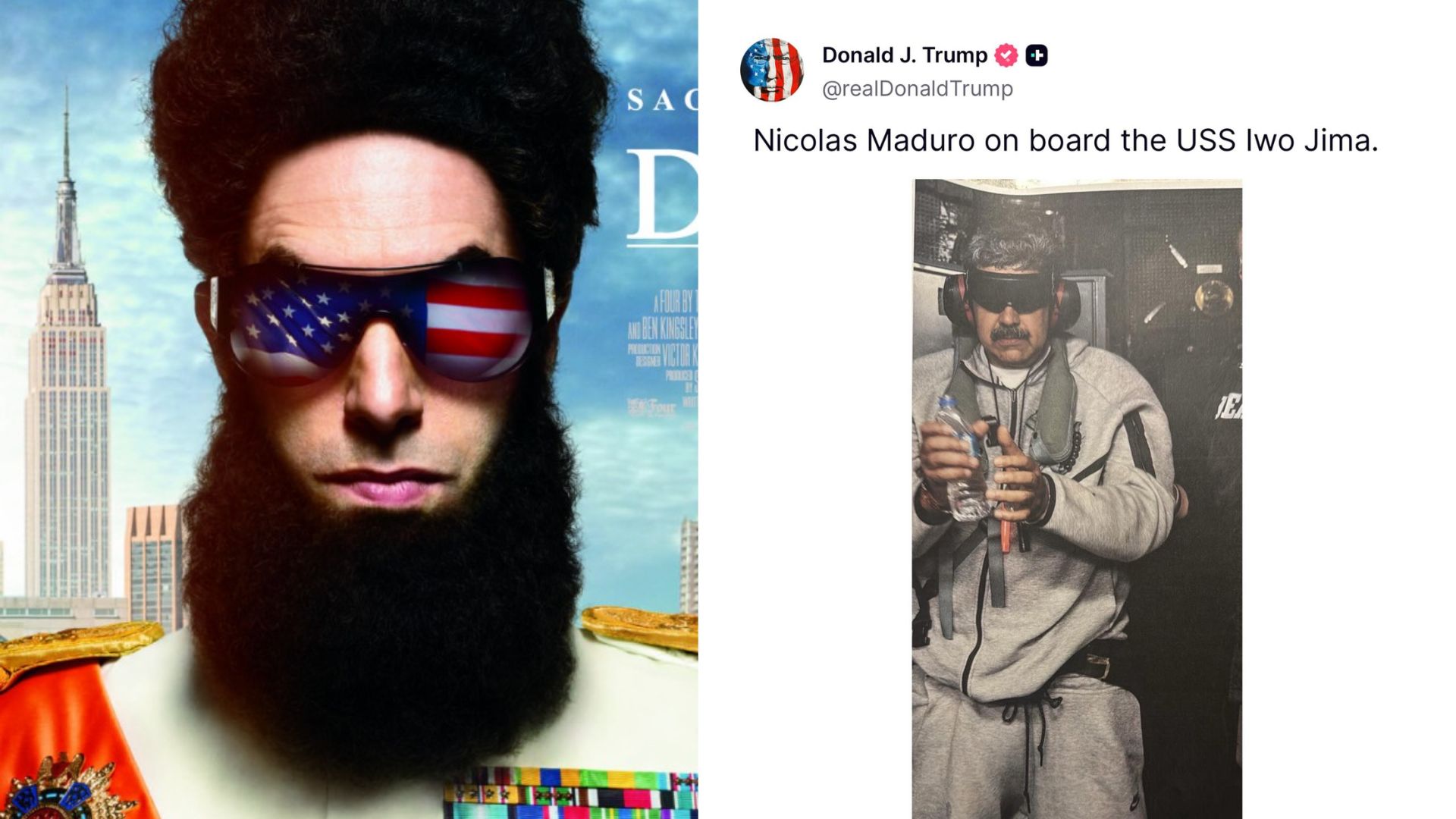
The Opening Credits On January 4, 2026, the geopolitical architecture of the Western Hemisphere didn’t just shift; it underwent a genre change. With a single image posted to Truth Social, President Donald Trump released the ultimate teaser trailer for the season finale of The Venezuelan Crisis. After years of slow-burn drama involving sanctions and diplomatic sternly-worded letters, the United States decided to skip the dialogue and cut straight to the third-act action sequence.
The proof-of-life photo wasn't just a verification; it was a review bomb on the concept of "sovereign immunity." It confirmed that Nicolás Maduro had been "extrajudicially extracted"—a polite, diplomatic euphemism for "snatched"—and was now a guest of the U.S. Navy.
Costume Design & Aesthetics The visual storytelling here is Oscar-worthy. For over a decade, Maduro played the role of the iron-fisted strongman, usually costumed in military fatigues or presidential sashes. The U.S. forces, serving as the new costume department, opted for a bold rebrand: a grey Nike tracksuit. It was a brutal sartorial demotion. Nothing says "your regime is over" quite like stripping a dictator of his medals and dressing him like a dad running errands on a Saturday morning.
The accessories really sold the scene. The blacked-out goggles and noise-canceling earmuffs weren't just standard military protocol for high-value detainees; they were the ultimate "Director's Cut." The U.S. essentially put the former president on mute and turned off his video feed, ensuring he couldn't deliver any final monologues or identify which part of the ocean he was currently floating on.
The Plot Twist For years, the "Indictment of 2020" plotline—where the DOJ charged Maduro with narco-terrorism—felt like a loose thread the writers had forgotten about. Critics said it was just prosecutorial fanfare. But in a classic callback, the U.S. revealed they were playing the long game. The "sovereignty shield," which usually protects heads of state from consequences, turned out to have a durability rating of zero against a Wasp-class amphibious assault ship.
By parking the USS Iwo Jima off the coast and physically removing the lead actor from his own set, the U.S. didn't just decapitate the power structure in Caracas; they bulldozed the studio.
The Review The strategic messaging is louder than a Hans Zimmer score. This wasn't just an arrest; it was a billboard aimed at every other autocrat with a "Death to America" bumper sticker. The message? “You can have your palace and your parades, but if you cross the narco-terrorism line, your next official state visit will be to a federal holding cell in New York.”
Coming Soon As the USS Iwo Jima steams toward the East Coast, the region faces a "governance crisis"—or as the audience calls it, a cliffhanger. The removal of the central antagonist has left a power vacuum, but it has also established a new, contentious precedent: The United States is no longer just watching the movie; they are now editing the cast list in real-time.
Ultimately, the image of Nicolás Maduro in sensory deprivation gear is a permanent testament to the moment the abstract concept of American Justice stopped being a metaphor and started being a very literal, very inescapable boat ride to Manhattan.



![From Kathmandu to the World: How Excel Students Are Winning Big [Admission Open]](https://nepalaaja.com/index.php/img/70194/medium/excel-college-info-eng-nep-2342.jpg)