
Is UML Turning Anti-Hindu? The Mask Slipping Off Its Nationalist Identity
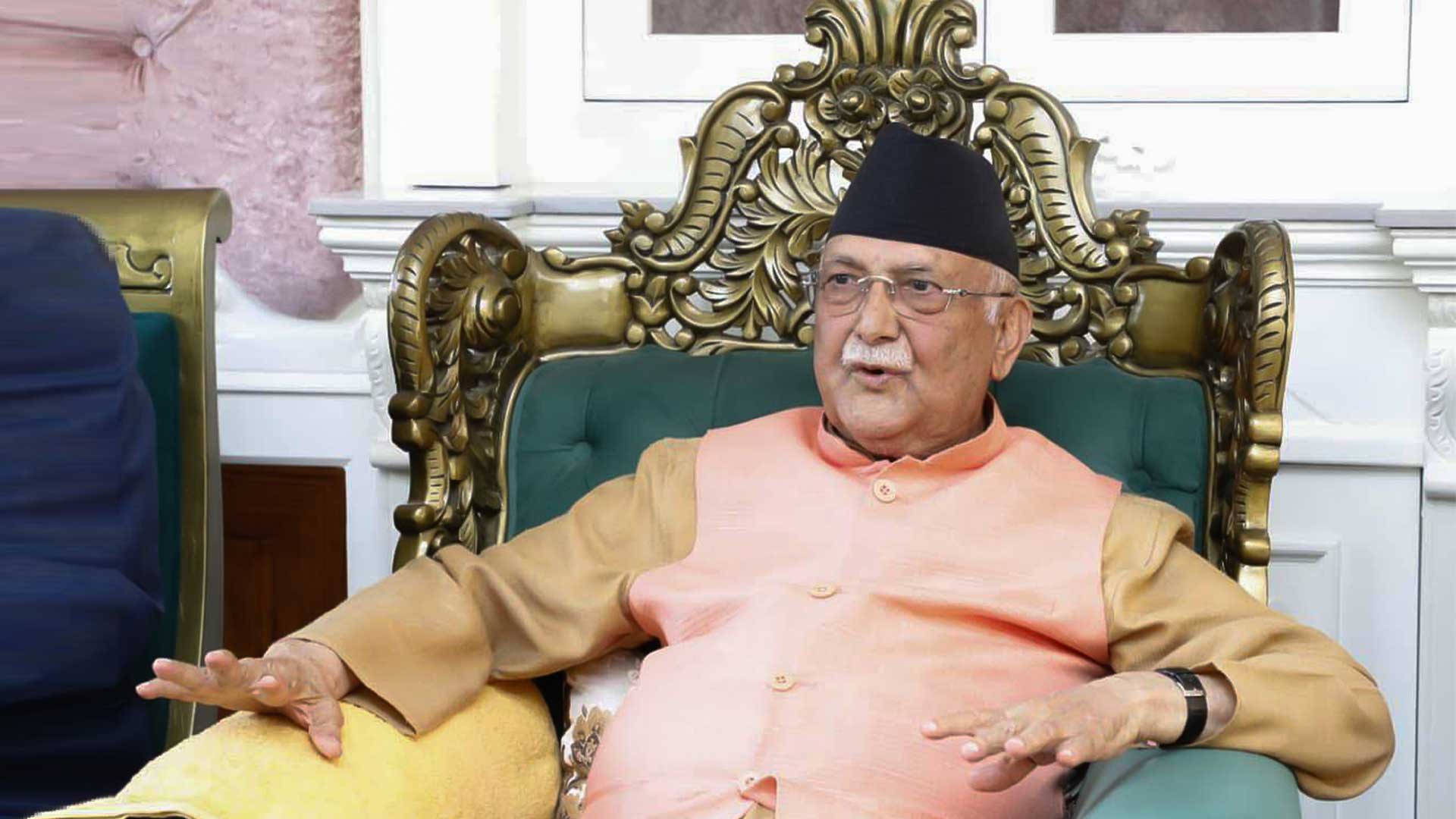
In Nepal’s political landscape, ideological shifts are not new. Yet rarely has a shift appeared as subtle, silent, and strategically complex as the one now emerging within the Communist Party of Nepal (UML). A party that has long branded itself as the torchbearer of Nepali nationalism is increasingly facing accusations that it is abandoning the very cultural and civilizational foundations that nationalism in Nepal is built upon. The charge is simple but explosive: Is UML gradually transforming into an anti-Hindu political force while still wearing the nationalist mask?
Nepal today is constitutionally secular, but the lived identity of the nation remains deeply anchored in Hindu civilization — its history, cultural norms, festivals, social institutions, and spiritual geography. Any policy shift capable of altering that foundation inevitably triggers controversy. And UML now finds itself at the very center of such controversy.
The first major flashpoint came when UML helped elevate individuals with direct links to religious conversion networks into positions of power within the federal parliament. In a society where conversion remains socially sensitive and historically contested, empowering actors aligned with conversionist agendas raises questions about long-term implications for cultural balance and national cohesion. UML offered no transparent justification, creating suspicion that political opportunism outweighs cultural accountability in its current strategy.
The case of Eknath Dhakal intensifies these suspicions further. Dhakal is widely known to be associated with a global religious organization frequently accused of using Nepal as an experimental ground for conversion-led influence expansion. As his political reach grows, analysts now question whether UML’s ideological direction is being guided — not from within — but through actors embedded in religious agendas that challenge Nepal’s traditional Hindu fabric.
The controversy escalated further in Madhesh Province. UML leadership advanced a formal Madrasa Education Board, effectively integrating a religion-based education structure into state governance. Secular education is meant to unite — not divide — future generations. When schools become institutionally separated by religion, the state itself becomes a facilitator of identity-based segregation. The long-term consequences of such a shift may not remain limited to education policy but could reshape the very psychology of national unity.
Alongside this, the announcement of exclusive higher-education financial grants for Muslim students sparked broader concerns regarding state neutrality. Public funds are contributed by citizens of all backgrounds. When benefits are allocated based on religious identity, it undermines equality, weakens secular fairness, and strengthens fears of identity politics penetrating national governance. Critics argue this is where UML’s “anti-Hindu tilt” becomes most visible — policies that appear hostile to the cultural majority while selectively privileging minority religious blocs for political calculus.
Taken together, these developments demonstrate that UML is moving away from its foundational stance that religion should remain a matter of personal faith and not political architecture. The growing pattern suggests a party increasingly comfortable sidelining Hindu identity — the civilizational backbone of Nepal — in pursuit of shifting power equations shaped by foreign influence and internal insecurity.
Political analysts note that UML’s identity crisis accelerated after losing power. Instead of reinforcing its ideological roots, it appears driven by experiment-oriented populism, using religious realignment as an instrument to regain electoral strength. Short-term gains may be visible, but the long-term risks are severe: social polarization, erosion of historical continuity, and weakening of the nation’s cultural resilience.
Nepal is not merely a bounded territory on the map — it is the living legacy of a civilization that has survived through shared beliefs, heritage, and symbols. When those foundations begin to crack, the damage extends far beyond political cycles. It touches the soul of the nation itself.
UML now owes the citizens an honest clarification. Are these decisions part of a coherent ideological redesign? Or is the party inadvertently — or deliberately — steering the country toward religious fragmentation under the banner of inclusivity?
The future of Nepal’s cultural identity depends on how honestly this question is answered, and how swiftly a transparent national conversation unfolds. For if Nepal loses its civilizational core, it risks becoming a state without memory — and a nation without direction.


![From Kathmandu to the World: How Excel Students Are Winning Big [Admission Open]](https://nepalaaja.com/index.php/img/70194/medium/excel-college-info-eng-nep-2342.jpg)
