Madarsa Board Uproar Puts Madhes Government Under Fierce Public Fire
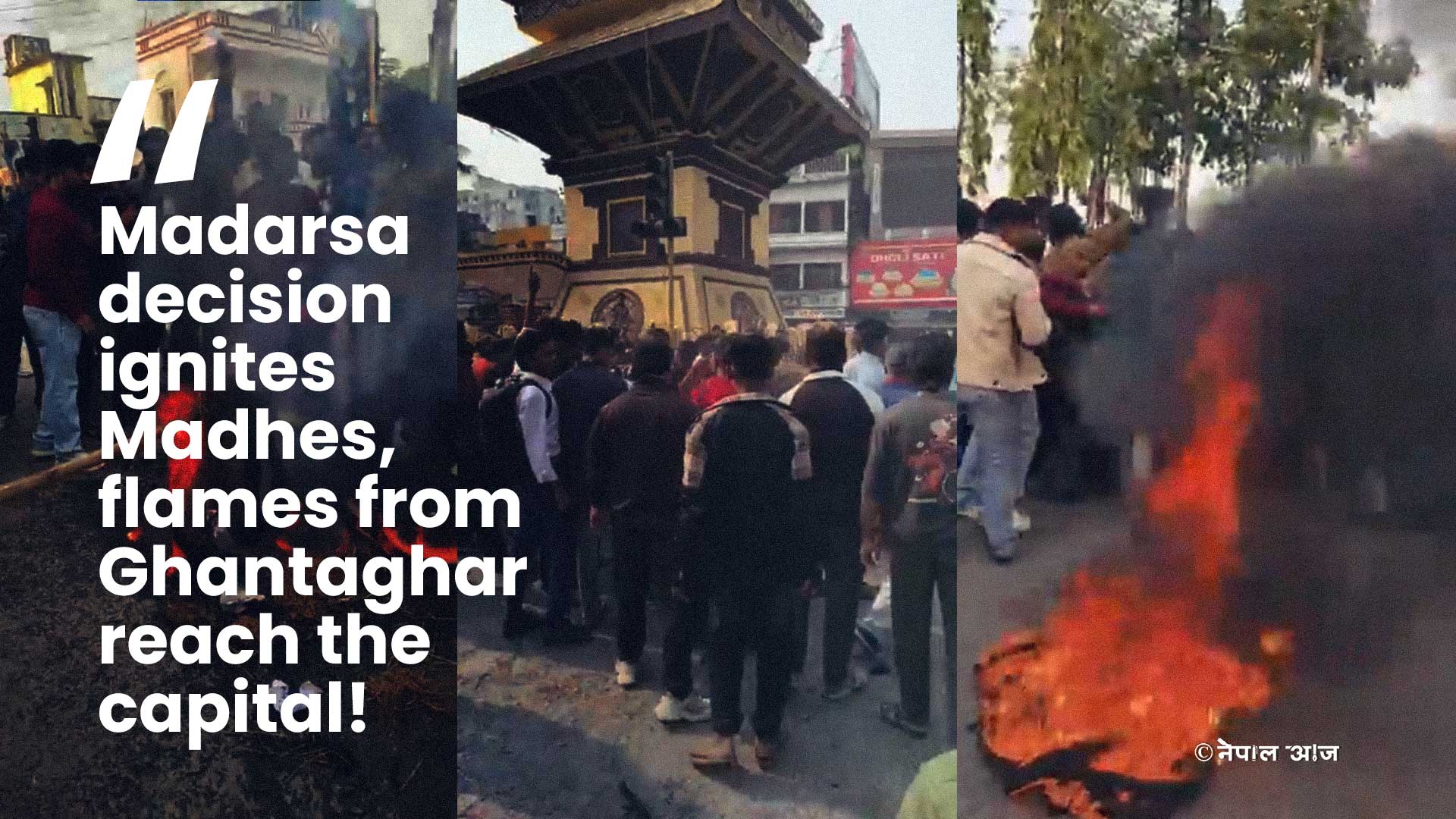
A massive fire rally organized today in Birgunj by the World Hindu Council Nepal has sent shockwaves through Madhes Province politics, after the provincial government approved the formation of a Madarsa Education Board and forwarded it to the Ministry of Education. Hundreds gathered around the iconic Ghantaghar area, where the protest not only challenged the government’s decision but also exposed deepening ideological polarization in the province. The Council accused Chief Minister Saroj Kumar Yadav of pushing the decision forward without necessary consultation, risk assessment, or sensitivity toward the Hindu community, calling the move “a dismissal of Hindu concerns.” The rally escalated with the burning of effigies, as demonstrators openly warned the provincial government to withdraw the decision immediately.
The controversy has once again dragged the political backdrop to the center of public debate. Only a few weeks earlier, then-Governor Sumitra Subedi Bhandari had appointed Saroj Kumar Yadav as Chief Minister—a decision that quickly became the target of widespread criticism. Bhandari had been perceived as politically close to the leadership of CPN-UML, a point frequently raised in public discourse. Representatives from multiple parties, along with civil society members, had accused her of acting in a partisan manner. As the dispute intensified, the federal government removed Governor Bhandari from office, prompting renewed debate over federal-provincial power balance and the constitutional role of provincial governors.
At the same time, CPN-UML chair KP Sharma Oli and the party’s leadership continue to face criticism from some groups for what they describe as ambiguous, inconsistent, and at times provocative public remarks on religious matters. While such criticisms come largely from political opponents or ideological critics, CPN-UML maintains that its policies and actions align with Nepal’s secular constitution and legal standards. Nevertheless, the party’s perceived proximity to certain international NGOs or minority-faith groups has created unease among segments of the Hindu community, a tension that resurfaced prominently during today’s demonstrations.
The torch rally conveyed a clear public message: in a socially diverse province like Madhes, sensitive policy decisions cannot be advanced without public dialogue, transparency, and a thorough assessment of long-term consequences. Whether the provincial government will stand firm or reconsider the decision remains unclear, leaving space for rising curiosity and growing tension. The questions raised on the streets of Birgunj now extend far beyond one decision, evolving into a broad test of political accountability for the Madhes government, CPN-UML leadership, and Nepal’s federal structure as a whole.
Madarsa Board Uproar

![From Kathmandu to the World: How Excel Students Are Winning Big [Admission Open]](https://nepalaaja.com/index.php/img/70194/medium/excel-college-info-eng-nep-2342.jpg)