


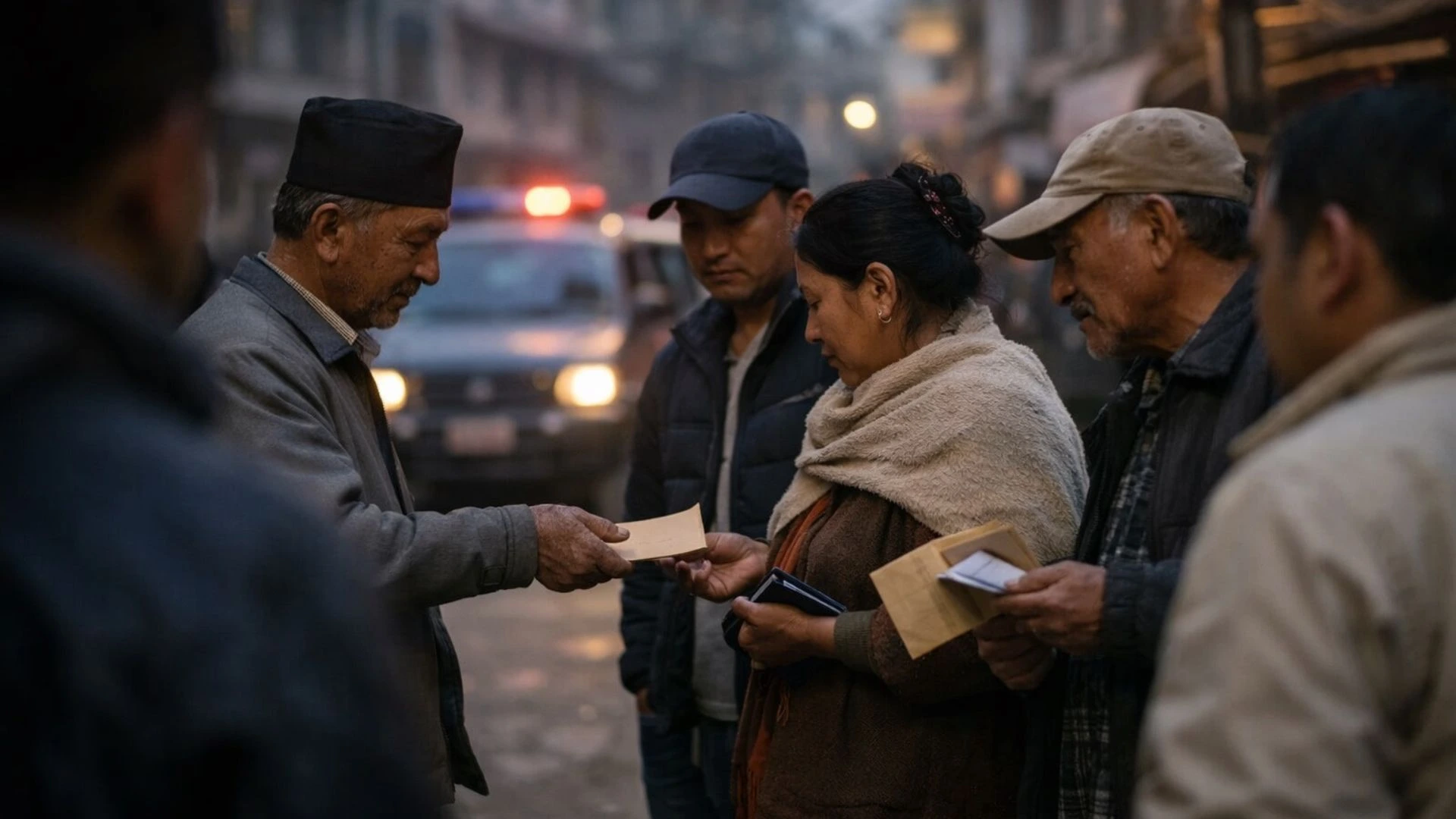
Kathmandu — As the nation approaches the election scheduled for Fagun 21 (March 5), the democratic process is reportedly being severely undermined by a surge in transaction-based politics driven by a class of "premium contestants." Off-the-record interviews with voters suggest that the electoral landscape has shifted from ideological contestation to a financial bidding war, particularly in regions outside the Kathmandu Valley. While incidents of vote-buying remain lower within the valley, sources indicate a pervasive culture of bribery elsewhere, where high-profile figures—including former prime ministers, ministers, and top leaders from major parties such as the Communist Party of Nepal (Unified Marxist–Leninist), Nepali Congress, and the Rastriya Swotantra Party—are allegedly deploying vast unaccounted sums to secure victory.
The escalation in illicit spending is reportedly driven by a sharp rise in voter expectations. According to local discourse, a prominent candidate who previously distributed 5,000 rupees per vote to approximately 30,000 individuals is now facing pressure to triple that amount to 15,000 rupees per vote to counter a competitive threat. This inflation is projected to drive off-the-books campaign spending from an estimated 15 crore rupees in the previous cycle to a staggering 45 crore rupees for the upcoming event. Although concrete proof of these transactions is non-existent due to the "smart" execution of deals and alleged support from local administration, allegations persist that cash is moved in trucks and that close aides of these candidates are siphoning funds to purchase luxury real estate and vehicles.

Interested in this ad?
Would you like to continue to the link or provide your information for more details?
Please provide your information
To continue, please fill in your details
This financial pressure has reportedly forced a strategic migration among the political elite. Sources claim that some candidates are opting to change constituencies not for ideological reasons, but to escape the "deep ties" and elevated financial expectations of voters in their previous strongholds. As voter demands for money and support increase, candidates unable to meet these bribe-centric expectations are marginalized, leaving limited space for honest political competition. This dynamic creates a bilateral erosion of ethics; observers note that voters are as culpable as the contestants, creating a cycle where "all are being dirty."
The volatility of the current political environment extends beyond finances to party loyalty. The campaign atmosphere has been compared by local critics to a "dirty picture," with some contestants described in severe terms as engaging in "political prostitution" by frequently switching party affiliations for personal benefit. This opportunism, combined with the dominance of ultra-rich businessmen and established leaders, suggests that the capacity for honest voters to elect ethical candidates is being systematically overwhelmed by resource-heavy campaigning.