


A Geographic Trap Turned Toxic
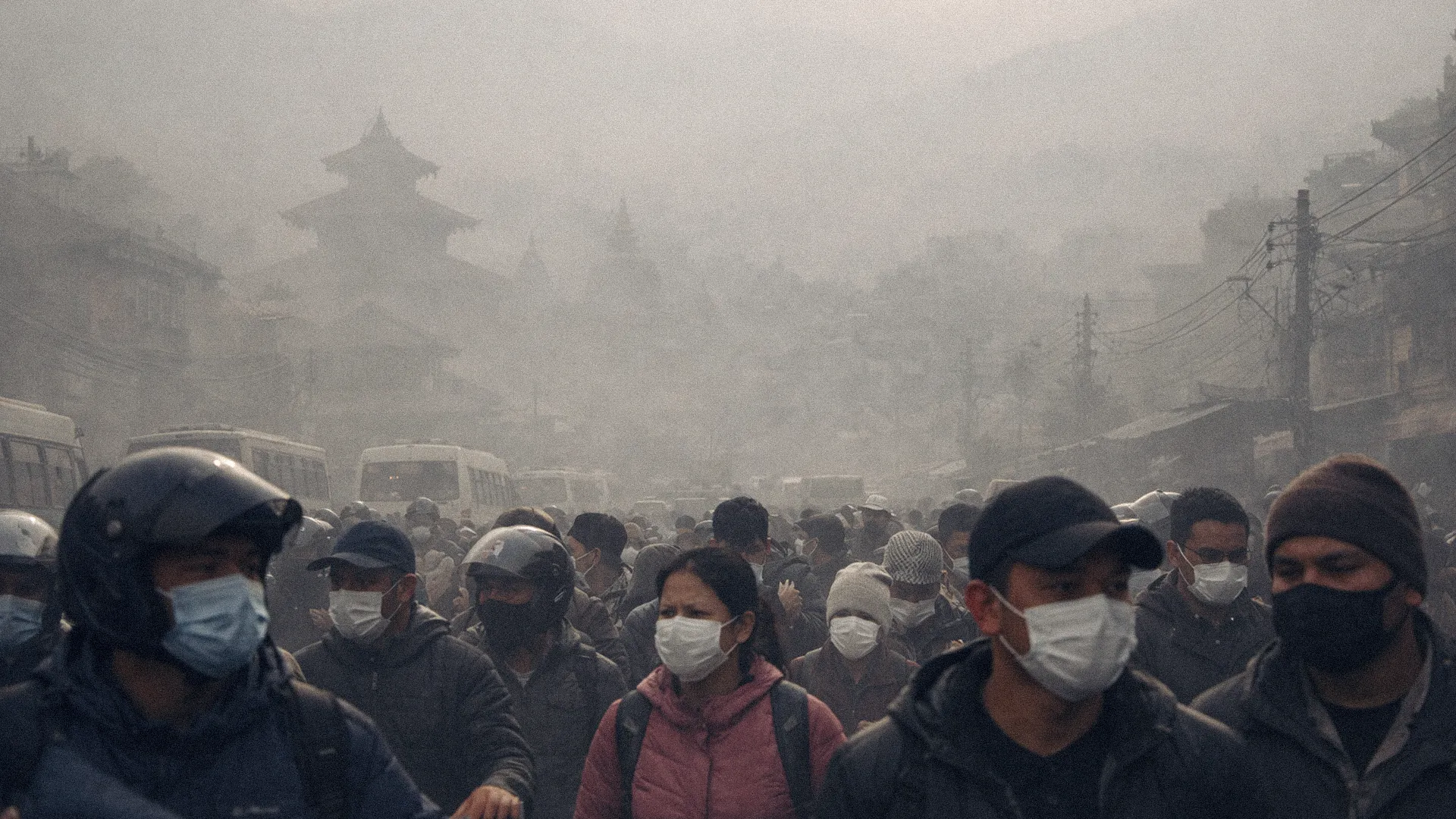
Once celebrated for its pristine Himalayan air, the Kathmandu Valley has transformed into a bowl of hazardous smog, trapping its residents in a deepening public health crisis. The region's unique bowl-shaped topography naturally creates thermal inversions that lock pollutants close to the ground, but human activity has turned this geographical feature into a suffocating trap. As of January 2026, the capital’s air quality frequently exceeds World Health Organization (WHO) guidelines by 10 to 20 times. Data indicates that the crisis is no longer seasonal but chronic; in 2023, Kathmandu was ranked the 11th most polluted city globally. The human toll is staggering, with pollution contributing to over 42,000 annual deaths across Nepal and reducing the average life expectancy of Valley residents by three to five years.
The Engine of Decline
The roots of this environmental disaster trace back to the rapid, unplanned urbanization following the political changes of the 1950s. As the population swelled from 400,000 to over 3 million by the 2000s, infrastructure failed to keep pace. The primary culprit remains the transport sector; official assessments attribute approximately 60 percent of the Valley's pollution to vehicle emissions. Since the restoration of democracy in the 1990s, fuel consumption has skyrocketed, yet regulatory mechanisms have crumbled. A pivotal failure occurred in 2007 when the last functional air quality monitoring station broke down due to poor maintenance, leaving policymakers blind for years and exposing a culture of institutional neglect that allowed the crisis to fester unchecked.
Policy Without Policing

Interested in this ad?
Would you like to continue to the link or provide your information for more details?
Please provide your information
To continue, please fill in your details
Despite the existence of the Environment Protection Act of 2019 and National Ambient Air Quality Standards, enforcement remains paralyzed by weak institutions and lack of political will. Reports from 2025 revealed that 58 percent of vehicles on Kathmandu’s roads failed emission standards, yet they continue to operate largely without penalty. The government’s inability to regulate brick kilns and manage open biomass burning further exacerbates the issue. This systemic failure is compounded by bureaucratic fragmentation, where responsibilities are scattered across the Ministry of Forests and Environment (MoFE) and local bodies, creating a vacuum of accountability. Consequently, environmental impact assessments (EIAs) for new projects are frequently bypassed or ignored due to red tape and corruption risks.
The Fire and the Fury
In recent years, the crisis has been amplified by climate change, leading to devastating wildfire seasons. The periods of 2021 and 2024–2025 saw record-breaking forest fires that blanketed the valley in haze, forcing school closures and disrupting flights. The situation reached a grim tipping point on March 28, 2025, when the government’s use of tear gas during civil protests caused a sharp spike in air pollution levels, drawing public outrage and highlighting the reckless intersection of state enforcement and public health. These incidents have cemented the perception of air pollution not just as an environmental issue, but as a failure of governance that costs the nation 4.5 percent of its GDP annually in health and productivity losses.
A Hazy Future
As the winter of 2026 sets in, Kathmandu remains gripped by a "policy paralysis" where international pressure from bodies like the World Bank spurs framework documents but little action on the ground. While new initiatives such as the 2025 Clean Air Framework offer a blueprint for industrial and vehicular emission reductions, the gap between legislation and implementation remains vast. Without a unified, empowered authority to enforce standards and tackle the transboundary and local sources of pollution, the Valley’s millions face a future where the simple act of breathing is a gamble with their longevity.