


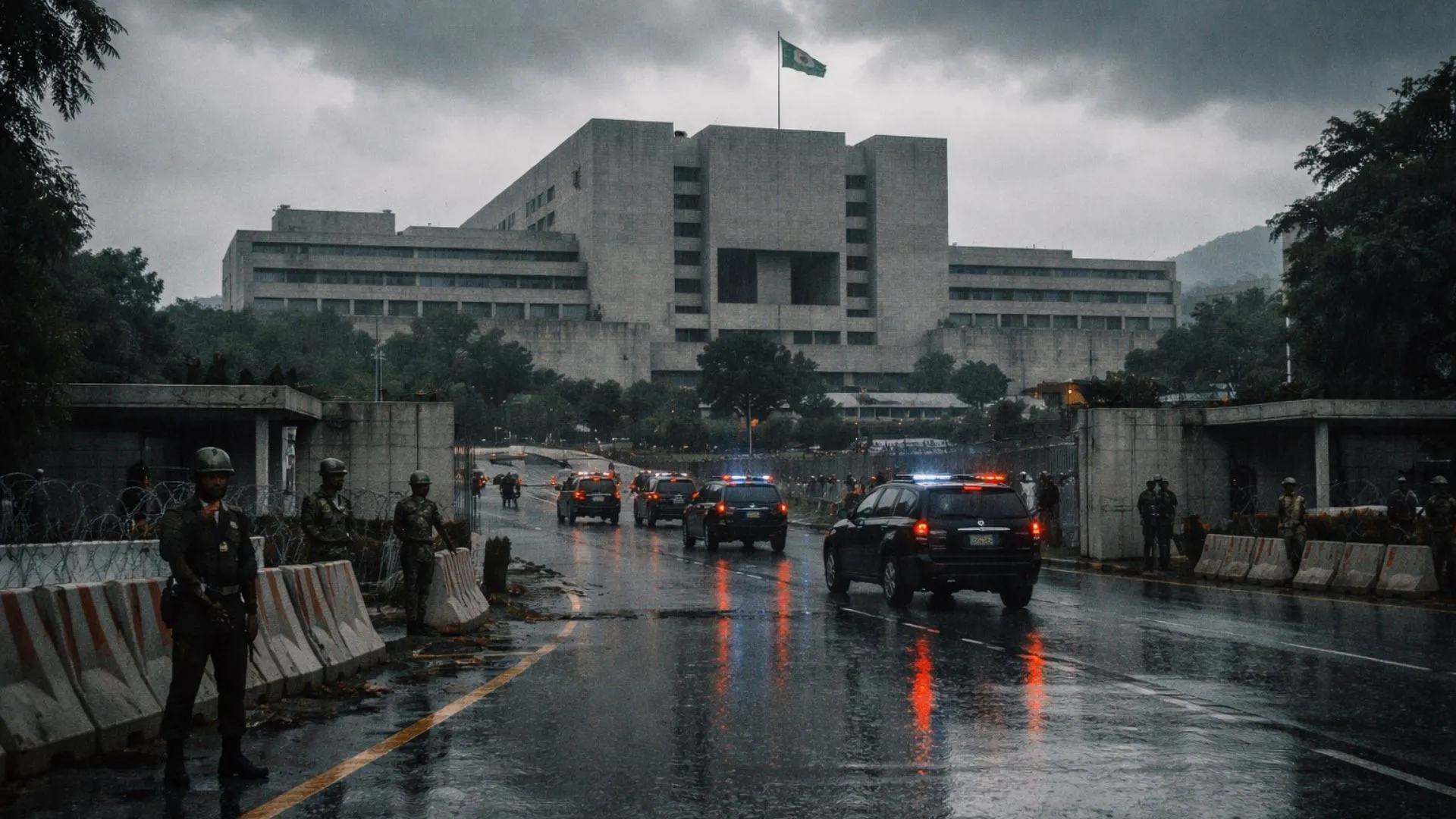
Islamabad – Despite Islamabad’s persistent claims of cracking down on illicit financial flows, a scathing new analysis suggests that Pakistan’s counter-terrorism measures are largely performative. A recent report by the Geopolitical Monitorcharacterizes the country’s actions as merely an "illusion of compliance," warning that while laws have changed on paper, the financial lifelines supporting extremist groups remain dangerously active.
For years, Pakistan has operated under the watchful eye of the Financial Action Task Force (FATF), scrambling to meet technical benchmarks to avoid blacklisting. However, the report indicates that while the state has successfully ticked off boxes regarding legal and institutional frameworks, the actual dismantling of terror infrastructure is virtually non-existent. The financial networks sustaining high-profile groups like Lashkar-e-Taiba (LeT) and Jaish-e-Mohammed (JeM) continue to function with relative impunity.
The investigation highlights a systemic failure to disrupt the grassroots funding mechanisms of these organizations. Terror financing continues to thrive through a web of charitable donations, non-governmental organizations (NGOs), unregulated madrassa networks, and cash-based transactions. Crucially, the report points to political patronage and a compromised prosecution system as key reasons why perpetrators often evade significant punishment, rendering legal reforms ineffective.

Interested in this ad?
Would you like to continue to the link or provide your information for more details?
Please provide your information
To continue, please fill in your details
Security analysts emphasize that this dual character—projecting compliance while harboring extremism—poses a severe and direct threat to regional stability in South Asia. The fallout is not limited to Pakistan's immediate neighbors like India and Afghanistan. The report explicitly identifies nations such as Nepal as becoming increasingly vulnerable to these cross-border radicalization networks and terror financing channels.
The assessment concludes with a stark warning to the international community: accepting cosmetic reforms without tangible results undermines the global fight against terrorism. Unless global powers exert pressure for practical, results-oriented action rather than bureaucratic compliance, the infrastructure of terror in the region is likely to persist and expand.