


Seasonal cross-border grazing practices that sustained western Nepal’s mountain communities for decades are now under strain, as multiple Nepali livestock herders report harassment, assault, and property destruction by Chinese security personnel despite an existing bilateral grazing framework between the two countries.
According to reporting by The Kathmandu Post (Feb 3) cited by TibetanReview.net, border residents from Bajhang district and nearby areas say Chinese patrol teams have in recent years sharply curtailed traditional pasture access across the Tibet frontier. Several herders allege they were physically assaulted, driven away, and had their temporary shelters and equipment burned, even though a 2012 Nepal–China agreement allows border inhabitants to graze livestock up to 30 kilometres across the boundary on a seasonal basis.
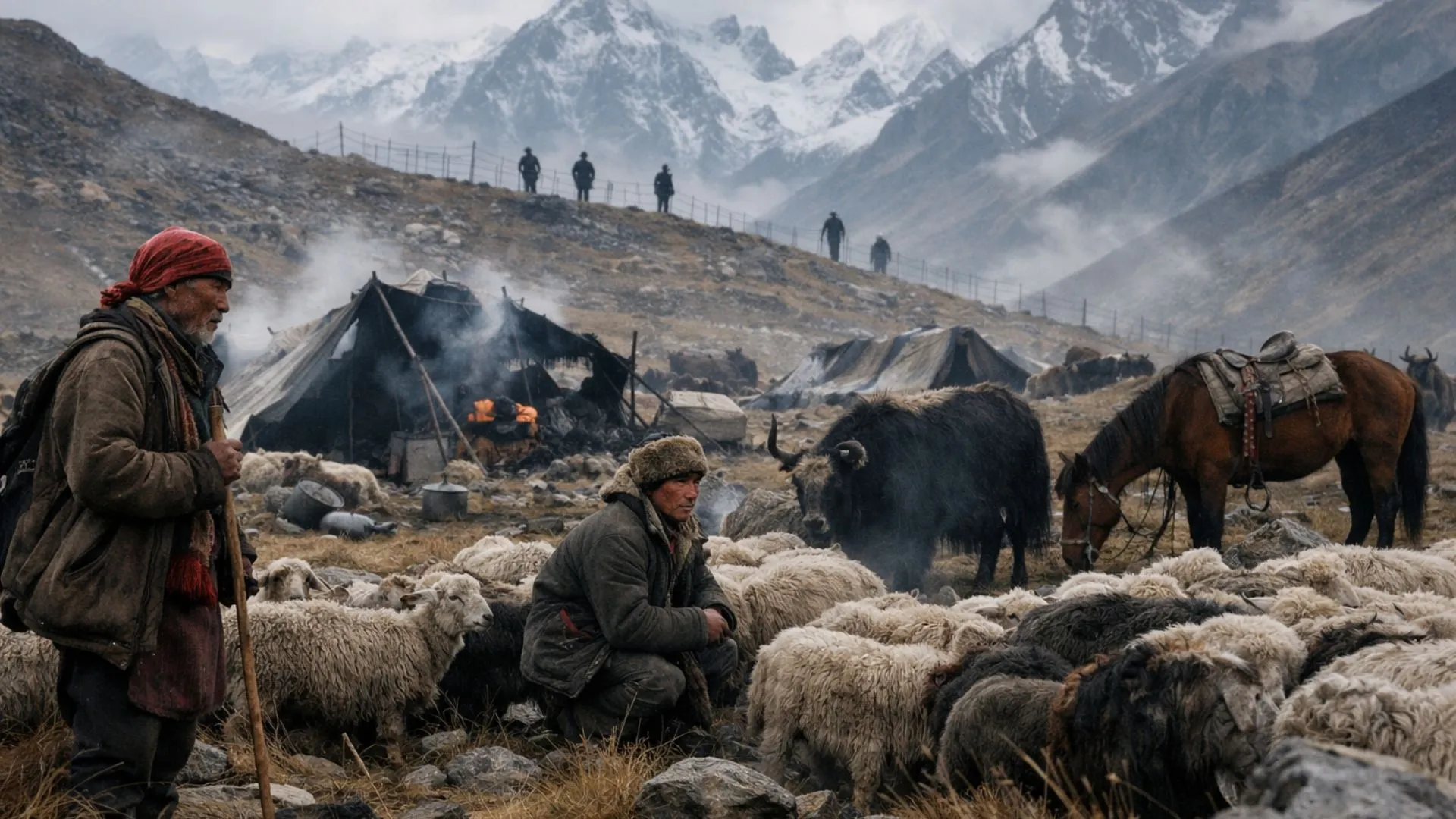
Two herders from Saipal Rural Municipality — Bir Bahadur Bohara and Pasang Tamang — said they had taken horses and mules to graze roughly 17 kilometres beyond Boundary Pillar No. 2 near Urai Bhanjyang when Chinese security personnel confronted them. They alleged their tents, bedding, food supplies, clothes, cooking tools, and horse gear were set on fire. Tamang said security staff struck him with his own phone after seizing it, damaging the device and leaving him injured. Both men said they were escorted back toward the Nepali side and warned not to return with livestock.
A separate incident was reported a day later involving 68-year-old pastoralist Sabbalya Raut of Jima, who said he fled after Chinese personnel attempted to manhandle him while he was grazing more than 550 sheep about 11 kilometres from the border. He said language barriers escalated tensions until interpreters from Humla intervened. He was not beaten but was forced to leave the site.
Local residents told the outlet these were not isolated cases. As reported, herder Samnel Gurung and 11 others were beaten near Lubu three years ago for entering without permits. Several villagers said areas once routinely used by their ancestors are now effectively inaccessible.

Interested in this ad?
Would you like to continue to the link or provide your information for more details?
Please provide your information
To continue, please fill in your details
Herders interviewed said enforcement has tightened progressively over the past seven to eight years, with Chinese authorities citing forest degradation linked to grazing. Before the Covid pandemic, they said, thousands of animals from Saipal alone crossed into Tibetan pastures each summer with minimal restriction, supporting both livelihoods and cross-border social ties. Those exchanges — including seasonal trade in wool, salt, grains, and spices — have since largely stopped after tighter border controls were introduced.
Former Nepali ambassador to China Rajeshwar Acharya told the publication that Nepal had not sufficiently advanced community-level concerns in its diplomatic engagement, noting that policy shifts by Beijing tend to follow national interest priorities and require calibrated responses
Separately, as reported by MyRepublica (Feb 6), domestic political debate has emerged around the Kathmandu visit of Kyabje Jonang Gyaltsab Rinpoche for a 10-day religious program that began Feb 1 at the invitation of Nepal’s Buddhist community. CPN-UML Vice Chair Ram Bahadur Thapa alleged the visit could be viewed unfavorably by China and claimed the religious figure received state-style protocol. Nepal’s Home Ministry spokesperson Anand Kafle and Nepal Police spokesperson DIG Abi Narayan Kafle denied having any such record or knowledge of official protocol arrangements.
Dolpo Society president Tashi Phuncho Gurung stated that inviting the Jonang spiritual leader reflects longstanding religious and cultural links with the Dolpo community.
With grazing access disputes and political sensitivities unfolding simultaneously, cross-border livelihood practices and diplomatic handling of border communities are likely to remain under close scrutiny.