



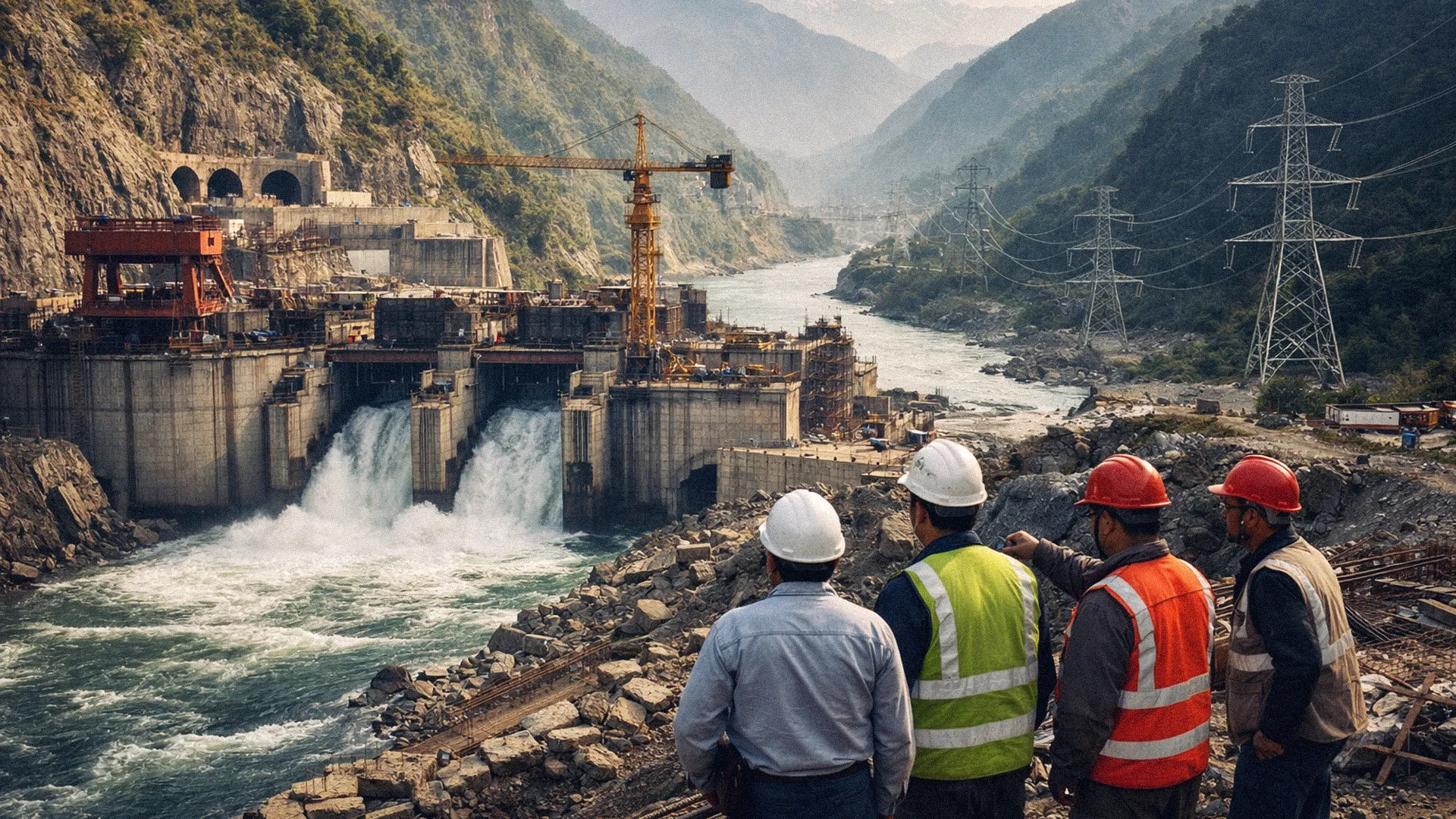
Nepal’s hydropower sector is set to attract renewed Chinese investment as Beijing looks to deepen its economic footprint in the Himalayan nation while tapping its vast untapped energy potential.
Speaking on the sidelines of the Asian Financial Forum in Hong Kong, Nepal’s Consul General Bindeswar Prasad Lekhak said Chinese stakeholders have already put forward proposals and are preparing additional foreign direct investment initiatives in the near term. According to him, China’s long-standing role as Nepal’s largest investor places it in a strong position to expand involvement in energy infrastructure.
Hydropower remains particularly appealing to Chinese firms because of Nepal’s growing ability to export electricity beyond its borders, especially to energy-hungry India. Nepal currently sells power to India and Bangladesh, and policy changes over the past five years have allowed Nepali producers access to India’s day-ahead power market.
Chinese companies already account for more than a quarter of Nepal’s hydropower projects, making China the single largest foreign participant in the sector. India follows as the second-largest investor, with several Western countries also involved. Major Chinese participation includes the 546-megawatt Upper Tamakoshi project, completed in 2021, and ongoing work on the 135-megawatt Manang Marsyangdi plant.
Despite this progress, Nepal has exploited only a fraction of its technical hydropower capacity. A 2024 joint study by Nepali and US researchers estimated that the country could feasibly scale production to 43 gigawatts, yet current utilization remains close to 10 percent. Analysts attribute this gap largely to financing constraints and infrastructure bottlenecks.
India’s growing energy deficit further strengthens Nepal’s export prospects. Regional energy experts note that India cannot meet long-term demand through domestic sources alone, positioning Nepal as a potential cross-border supplier if generation and transmission capacity expand.
However, hydropower expansion also brings challenges. Studies highlight risks ranging from local displacement and water-sharing disputes to domestic resistance against exporting electricity while internal power shortages persist. Diplomatic sensitivities between China and India have also previously complicated project approvals, including Nepal’s cancellation of a major Chinese-backed hydropower contract in 2017.
Beyond energy, Chinese investors are also expected to increase engagement in Nepal’s tourism sector, particularly hotel infrastructure, as visitor numbers rebound. Tourism contributes roughly 6–8 percent of Nepal’s economy, with around 1.5 million tourists recorded in the last fiscal year.
As Nepal balances development ambitions with geopolitical realities, hydropower remains central to its economic strategy—offering both opportunity and complexity in equal measure.