


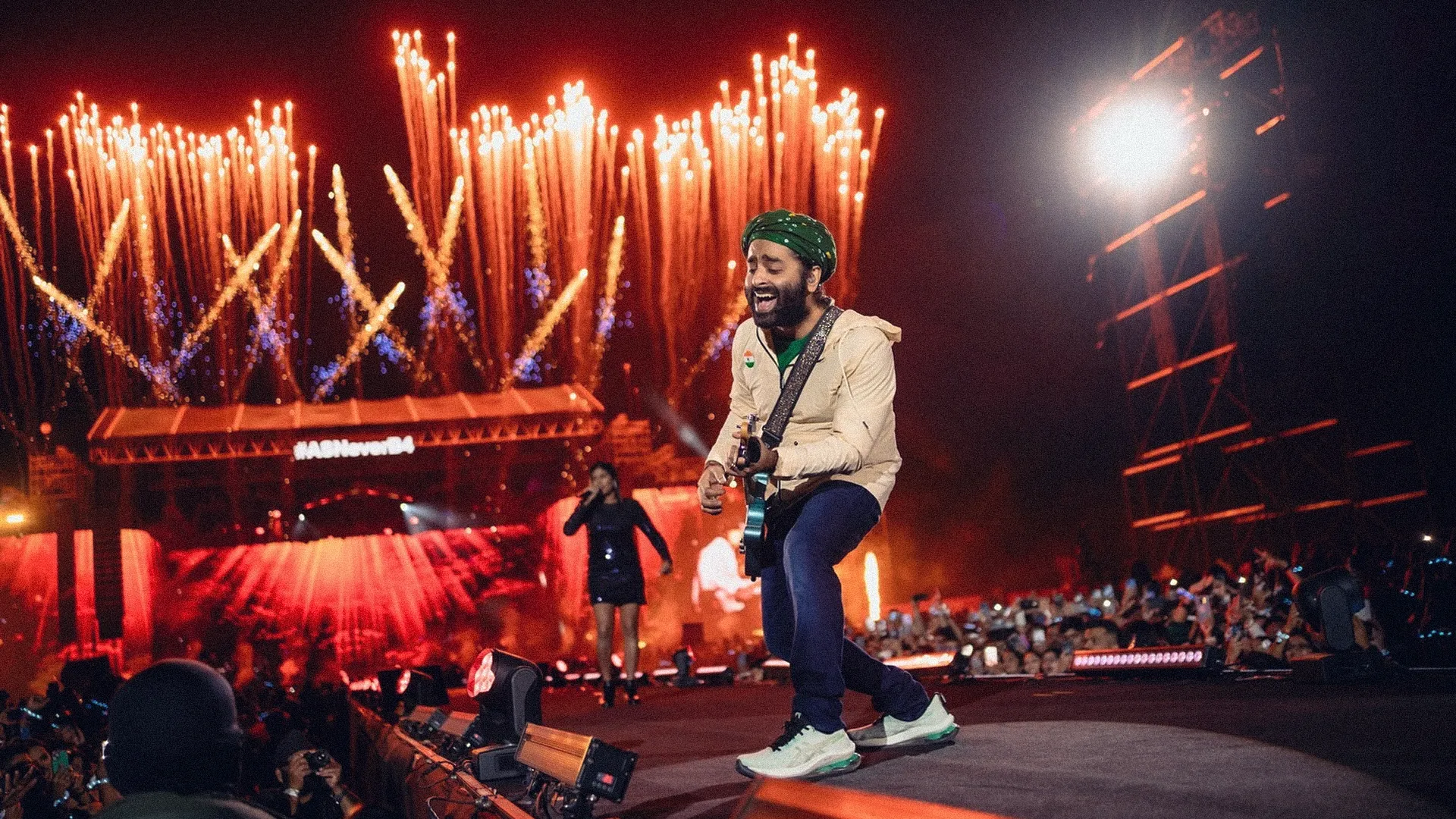
The announcement by Arijit Singh that he will no longer accept new playback singing assignments has triggered an outpouring of reflection across India, marking a rare pause in one of Bollywood’s most defining musical journeys.
The 38-year-old singer shared the decision on Instagram on Tuesday, describing his years in playback singing as a “wonderful journey.” While he did not specify the reason behind the move, reports indicate he will complete existing film commitments and continue creating music independently, outside the commercial film system.
Playback singing—where voices recorded in studios are lip-synced by actors on screen—has long been central to Hindi cinema’s emotional language. Singh’s voice became deeply woven into that tradition, shaping romantic ballads and soundtracks that dominated charts for more than a decade.
Public reaction has been swift and emotional. Fans described his songs as a constant presence through personal heartbreaks and celebrations, reflecting how his music crossed beyond cinema into everyday life.

Interested in this ad?
Would you like to continue to the link or provide your information for more details?
Please provide your information
To continue, please fill in your details
Singh’s decision stands out for its timing. He steps back while still commanding global audiences, having recently performed to a sold-out Wembley Arena—an achievement reached by very few Indian playback singers. Despite such milestones, he has consistently distanced himself from celebrity culture, avoiding publicity, limiting interviews, and openly expressing discomfort with fame.
Born in 1987 in Jiaganj, West Bengal, Singh grew up immersed in music, receiving early classical training alongside exposure to popular forms. After an unremarkable appearance on a television reality show in 2005, he spent years working behind the scenes as a music programmer before his breakthrough in 2013 with Tum Hi Ho from Aashiqui 2. The song reshaped Bollywood’s romantic soundscape, re-centering vulnerability as a mainstream emotion.
What followed was a prolific period marked by collaborations with leading composers and recordings across multiple Indian languages. Yet even as his voice became ubiquitous, Singh began scaling back, acknowledging in interviews that constant exposure made him uneasy.
As listeners now speculate on what lies ahead, one fact remains unchanged: while his presence in film studios may recede, his influence on Indian music—and its emotional memory—will endure.