

Every students of Economics 101 must have gone through the chapters on factors of production, in a sequential manner from land, labor to capital. This is 19th Century economics. You may find authors adding more factors like information, innovation, entrepreneur skills (management) etc. However, the basic elements are land, labor and capital in a sequential order. Acquisition of more land was the starting point hence, saving some landlocked countries, you find borders of all countries ended at the sea shore - indicating end of the land.
Once you have land (primarily for agriculture), you need labor to exploit that resource. And to exploit labor, you need capital. That became a food for thought for Karl Marx. One thing to remember is that land is the starting point for all conflicts. It is a mother of all conflicts. And this is more so in a small landlocked mountain country like Nepal.
Recent eviction of squatters would going to cost a lot to the country and to those taking leadership positions. Just watch my words.
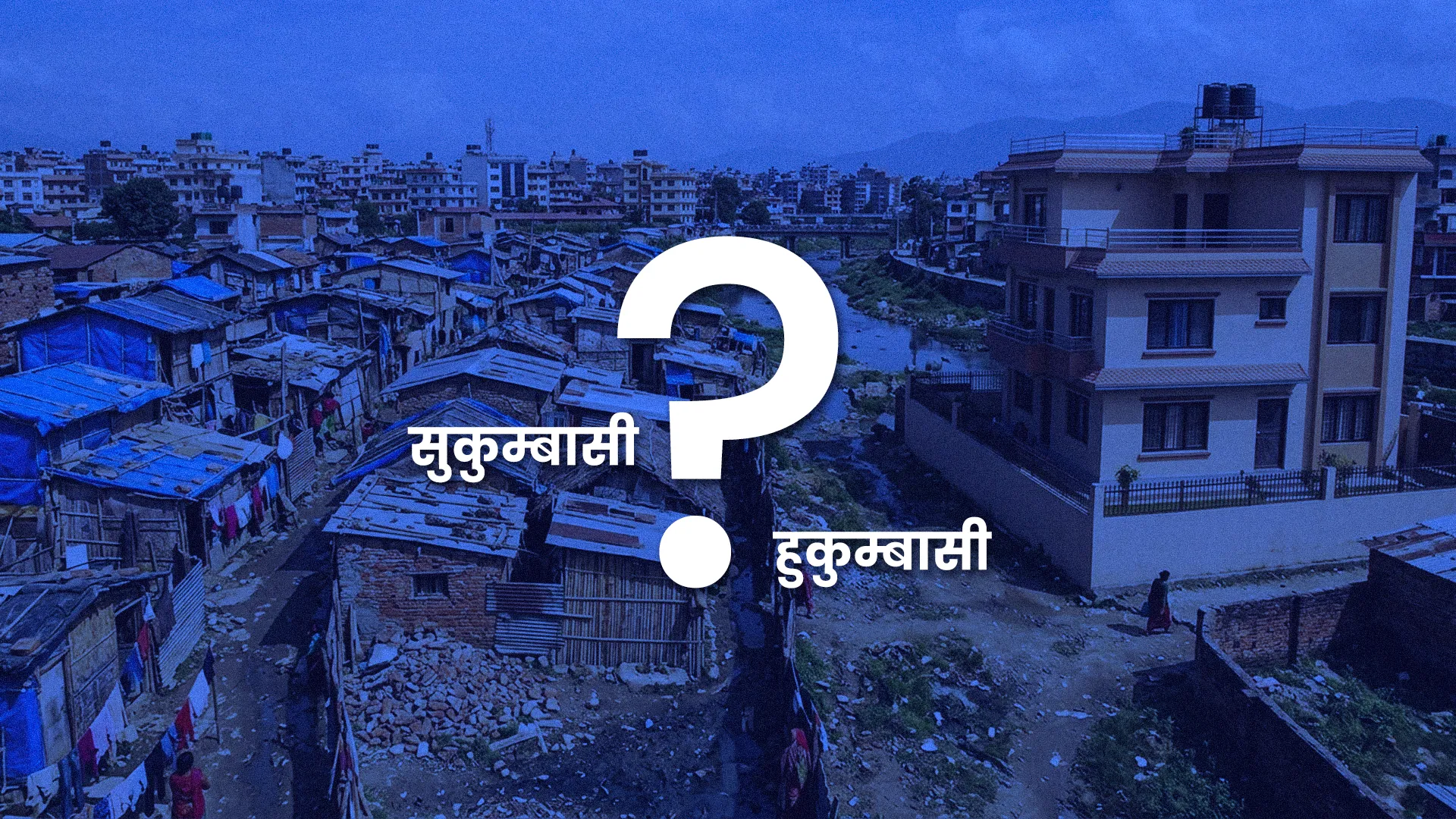
Sukumbasis and Hukumbasis
We have been flooded by the news about peaceful or forceful eviction of squatters in Kathmandu. The demonstration effect is being seen all over urban areas having slum dwellers - Butawal, Nawalparasi, Pokhara, Lalitpur and Biratnagar. There are news about further deadlines to clear the land. Earlier, demolitions were triggered by road expansion and riverside protection. This time it has to do with slums and ragtag settlements. Remember, how Babu Ram (his daughter) paid the price? The direct beneficiaries of pavement expansion (vehicle owners) were not his voters but those affected were.
For non-Nepali speakers, a bit of explanation is required here on sukumbasis and hukumbasis. Sukumbasis, literally, stands for landless squatters. It could mean anything from people displaced by natural disasters to slum dwellers to shanty town workers to political party vote banks. Hukumbasis are opposite of Sukumbasis, that is, fake-squatters or more specifically, land grabbers operating under the clout of political order or hukum in Nepali. Because of prolific use of the terms, they are anonymous and indistinguishable. All sukumbasis are reduced to humkumbasis and all hukumbasis are reduced to sukumbasis. If you have nice looking riverside big new house, you may be easily labeled as a hukumbasi. If you are not with RSP, don’t even dare to show off your iphone or gold chain even by mistake, you may labeled hukumbasi. Actually, they are after small hukumbasis, there are big and really powerful hukumbasis grabbing public land either by force or by diktat.
Indiscriminate forced eviction
The use of random, indiscriminate forced eviction - irrespective to thee age, gender, health condition, caste, religion of the settlers - reflect a lack of preparedness. During two days of ransacking, security forces demolished around 2000 houses, affecting 10,000 people. The exercise was so indiscriminate that they did not leave behind schools, churches, temples and gumbas. PM’s former legal advisor has to remind the difference between “rule of law” and “rule by law”.
Some say, it is the result of inflated ego of the PM. Earlier, during his stint at the KMC, he did not receive cooperation, he was forced to back down. This time, he is here to settle old scores. Two-day notification was issued before taking actions. And this came, immediately, after his Home Minister resigning. Lack of planning and preparedness is further evidenced by hurried last minute painting carried out at the government owned buildings erected to house evicted squatters. Nearly, one-third of the evicted people reported, majority preferred to settle on their own. The regime took this as filtering out hukumbasis - not as a lack of public trust in the government. There are news about people queuing up for registration expecting government support, some coming from outside the settlement.
The government’s intention will be cleared only after knowing how long it can afford to take care the victims and what happen to the land they have been evicted from.
Having schadenfreude attitude
As I mentioned above the problem is now being magnified from Kathmandu slum dwellers to other areas of the country, we continue to hold the attitude of schadenfreude, that is, taking pleasure over others pain. Mixing sukumbasis as or with hukumbasis is basically due to this attitude. For long, it is not the invisible smell of Bagmati that drew our attention rather the visible slums at the banks becoming an eye sore. We are little concerned by how big hukumbasis captured Bhadrakali and Tundikhel then by the captured of river side by outsiders.
Holding myopic attitude
Sounds like we can eliminate poverty by eliminating poor people. The myopic attitude holds true for fighting corruption. You eliminate corruption by eliminating corrupt people. The government fails to understand that corruption, like poverty, is a disease and corrupt people, like poor people, are sick people. It is natural for a medical doctor to get angry with the sickness, with the disease but not with the sick person infected by that sickness. Agreed that some or rather lots of slum dwellers are hukumbasis, in the garb of sukumbasis, but you don’t kill them first and do the body counting later. That is what the government is doing - demolish the settlement, ransack their houses and do the screening and registration later.
With the new diktat to clear public land the government is, literally, seeking to take the conflict to a bigger or even a higher level. As I mentioned at the start, conflict related to land are the most complicated conflicts. The conflicts related to labour and capital are of no comparison.